
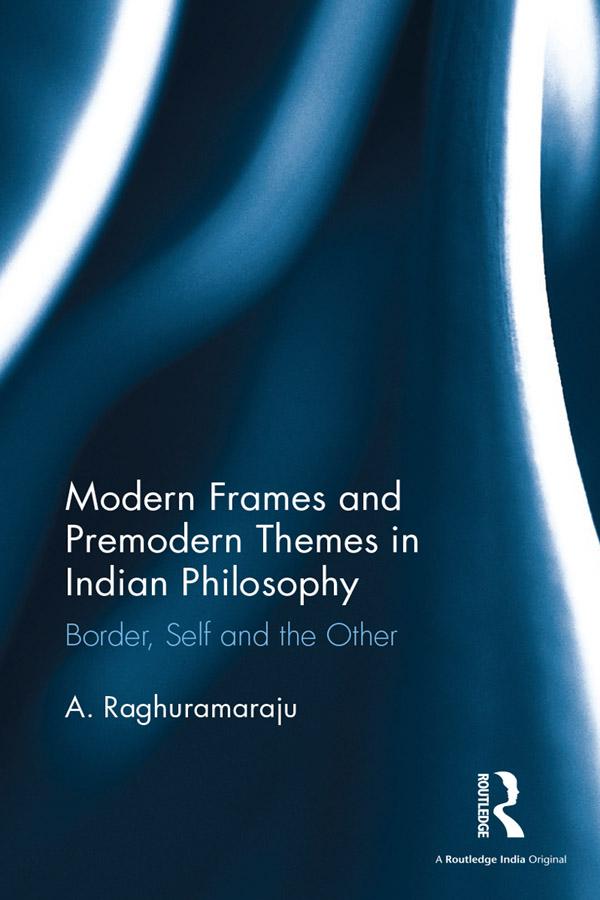
This book presents a fascinating examination of modern Indian philosophical thought from the margins. It considers the subject from two perspectives – how it has been understood beyond India and how Indian thinkers have treated Western ideas in the context of Indian society. The book discusses the concepts of the self, the other and the border that underline various debates on modernity. In this framework, it proposes the notion of the other as an enabler in taking cue from the lives of Swami Vivekananda, Mahatma Gandhi and Rabindranath Tagore. It focusses on the nature and compulsions of the colonised self, and its response to the body of unfamiliar and sometimes oppressive ideas. The study traces these themes with allusion to the works of Edward Said, Frantz Fanon and Krishna Chandra Bhattacharyya and the Bhagavad Gita. The author exposes the limitations in existing theories of self, the incompatibility between the slavery of self and svaraj in ideas, how the premodern village intersects modern city and democracy, the radical challenges that confront society with its accumulated social evils, inequality, hierarchy and the need for reform and non-violence.
This engaging work will be of interest to scholars and researchers of Indian philosophy, social and political philosophy, Indian political theory, postcolonialism and South Asian studies.
Płać wygodnie kartą, Klarną, Apple Pay lub Google Pay. Nie jesteś zadowolony? Zawsze masz 14-dniową gwarancję zwrotu pieniędzy. Więcej przeczytasz w naszych warunkach. Masz pytania? Napisz do nas na hello@memmo.org.
Memmo ułatwia naukę – gdziekolwiek jesteś na świecie. U nas znajdziesz podręczniki i sprytne narzędzia do nauki w jednym miejscu: streszczenia, quizy, podcasty i fiszki. A do tego Ted, Twój kumpel do nauki, który odpowie na wszystko, co Cię nurtuje. Ponad 50 000 studentów już tu się uczy – stworzone, byś uczył się szybciej i mniej stresował.