
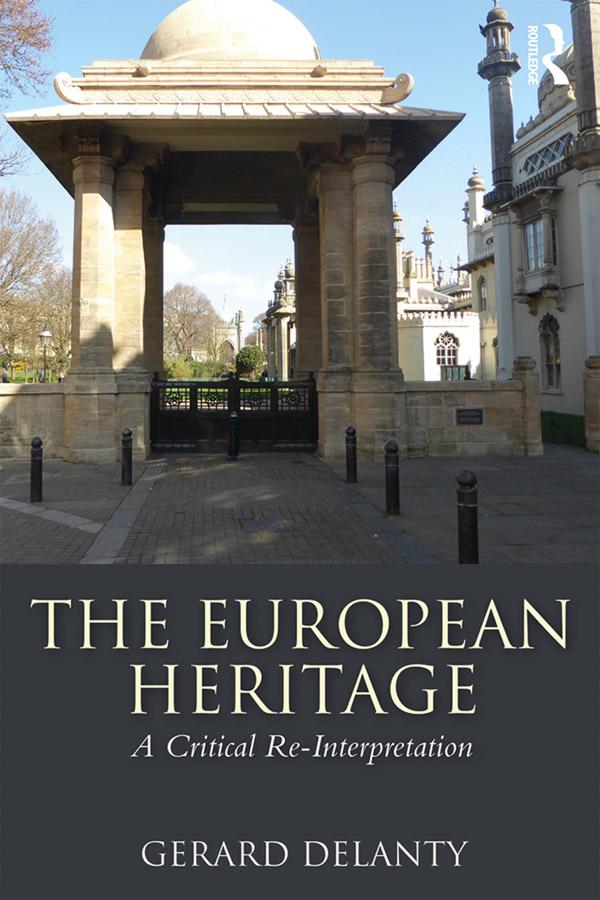
Gerard Delanty offers a critical interpretation of the European heritage today in light of recent developments in the human and social sciences, and in view of a mood of crisis in Europe that compels us to re-think the European past. One of the main insights informing this book is that a transnational and global perspective on European history can reorient the European heritage in a direction that offers a more viable way for contemporary Europe to articulate an intercultural identity in keeping with the emerging shape of Europe, and with its own often acknowledged past. He argues that the European heritage is based less on a universalistic conception of culture than on a plurality of interconnecting narratives. Such a perspective opens up new directions for scholarship and public debate on heritage that are guided by critical cosmopolitan considerations that highlight contention, resistances, competition, and dissonance. He argues that the specificity of the European dimension of culture is in the entanglement of many cultures rather than in an original culture. The cultures of Europe are not separated but have been shaped in close interaction with each other and with the non-European world. Nations are not therefore unique, exceptional, or fundamentally different from each other. The outcome of such intermingling is a multiplicity of ideas of Europe that serve as shared cultural reference points.
Płać wygodnie kartą, Klarną, Apple Pay lub Google Pay. Nie jesteś zadowolony? Zawsze masz 14-dniową gwarancję zwrotu pieniędzy. Więcej przeczytasz w naszych warunkach. Masz pytania? Napisz do nas na hello@memmo.org.
Memmo ułatwia naukę – gdziekolwiek jesteś na świecie. U nas znajdziesz podręczniki i sprytne narzędzia do nauki w jednym miejscu: streszczenia, quizy, podcasty i fiszki. A do tego Ted, Twój kumpel do nauki, który odpowie na wszystko, co Cię nurtuje. Ponad 50 000 studentów już tu się uczy – stworzone, byś uczył się szybciej i mniej stresował.