
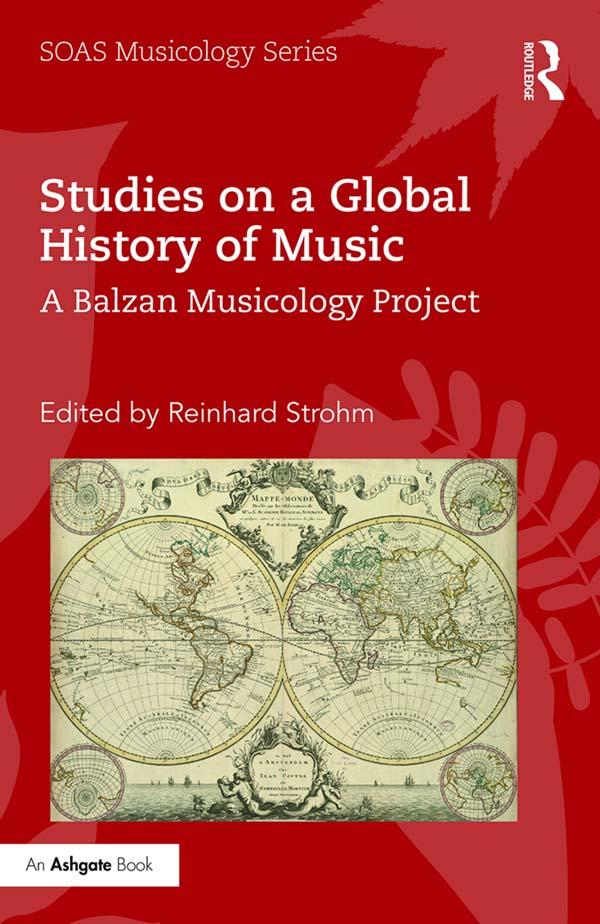
The idea of a global history of music may be traced back to the Enlightenment, and today, the question of a conceptual framework for a history of music that pays due attention to global relationships in music is often raised. But how might a historical interpretation of those relationships proceed? How should it position, or justify, itself? What would 'Western music' look like in an account of music history that aspires to be truly global?
The studies presented in this volume aim to promote post-European historical thinking. They are based on the idea that a global history of music cannot be one single, hegemonic history. They rather explore the paradigms and terminologies that might describe a history of many different voices. The chapters address historical practices and interpretations of music in different parts of the world, from Japan to Argentina and from Mexico to India. Many of these narratives are about relations between these cultures and the Western tradition; several also consider socio-political and historical circumstances that have affected music in the various regions. The book addresses aspects that Western musical historiography has tended to neglect even when looking at its own culture: performance, dance, nostalgia, topicality, enlightenment, the relationships between traditional, classical, and pop musics, and the regards croisés between European, Asian, or Latin American interpretations of each other’s musical traditions.
These studies have been derived from the Balzan Musicology Project Towards a Global History of Music (2013–2016), which was funded by the International Balzan Foundation through the award of the Balzan Prize in Musicology to the editor, and designed by music historians and ethnomusicologists together. A global history of music may never be written in its entirety, but will rather be realised through interaction, practice, and discussion, in all parts of the world.
Płać wygodnie kartą, Klarną, Apple Pay lub Google Pay. Nie jesteś zadowolony? Zawsze masz 14-dniową gwarancję zwrotu pieniędzy. Więcej przeczytasz w naszych warunkach. Masz pytania? Napisz do nas na hello@memmo.org.
Memmo ułatwia naukę – gdziekolwiek jesteś na świecie. U nas znajdziesz podręczniki i sprytne narzędzia do nauki w jednym miejscu: streszczenia, quizy, podcasty i fiszki. A do tego Ted, Twój kumpel do nauki, który odpowie na wszystko, co Cię nurtuje. Ponad 50 000 studentów już tu się uczy – stworzone, byś uczył się szybciej i mniej stresował.