
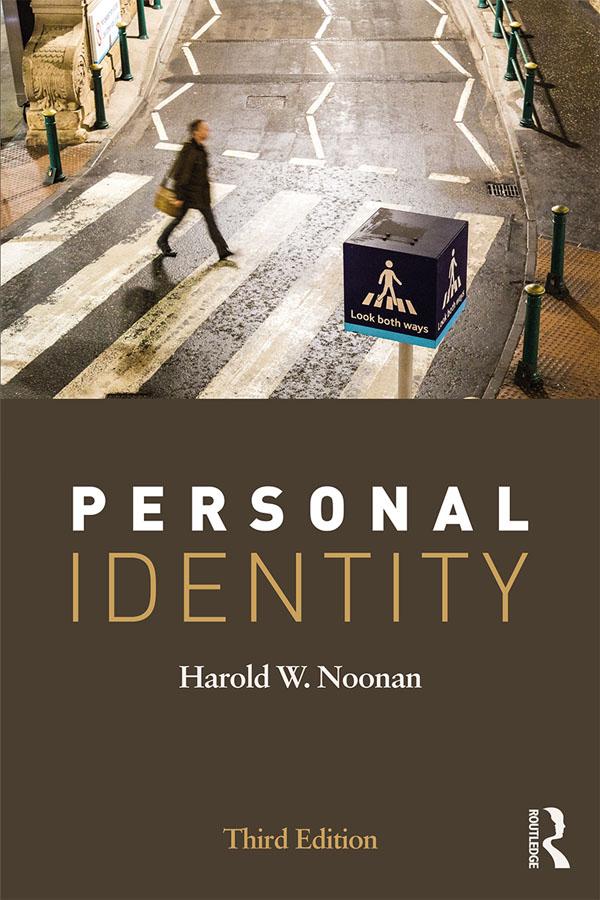
Who am I? What is a person? What does it take for a person to persist from one time to another? What is the relation between the mind and the body? These are just some of the questions that constitute the problem of personal identity, one of the oldest and most fundamental of philosophical questions. Personal Identity, Third Edition is a clear and comprehensive introduction to these questions and more. Harold Noonan places the problem of personal identity in the context of more general puzzles about identity, discussing the major historical theories and more recent debates. The book also includes essential historical and philosophical background to the problem of personal identity as found in the arguments of Locke, Reid and Hume among others.
The third edition of Personal Identity has been thoroughly reviewed in light of advances in the latest literature and research. This includes significant revision to the important problems of the simple and complex distinction and its relation to reductionism; temporal parts; and the distinction between perdurance and endurance theorists. Noonan also includes an up to date examination of personal identity and memory and personal identity and animalism, particularly the work of Shoemaker, Parfit, Olson and hybrid theorists.
Including helpful chapter summaries and annotated further reading at the end of each chapter, Personal Identity, Third Edition is essential reading for all students of philosophy of mind and metaphysics, as well as students interested in ethics.
Płać wygodnie kartą, Klarną, Apple Pay lub Google Pay. Nie jesteś zadowolony? Zawsze masz 14-dniową gwarancję zwrotu pieniędzy. Więcej przeczytasz w naszych warunkach. Masz pytania? Napisz do nas na hello@memmo.org.
Memmo ułatwia naukę – gdziekolwiek jesteś na świecie. U nas znajdziesz podręczniki i sprytne narzędzia do nauki w jednym miejscu: streszczenia, quizy, podcasty i fiszki. A do tego Ted, Twój kumpel do nauki, który odpowie na wszystko, co Cię nurtuje. Ponad 50 000 studentów już tu się uczy – stworzone, byś uczył się szybciej i mniej stresował.