
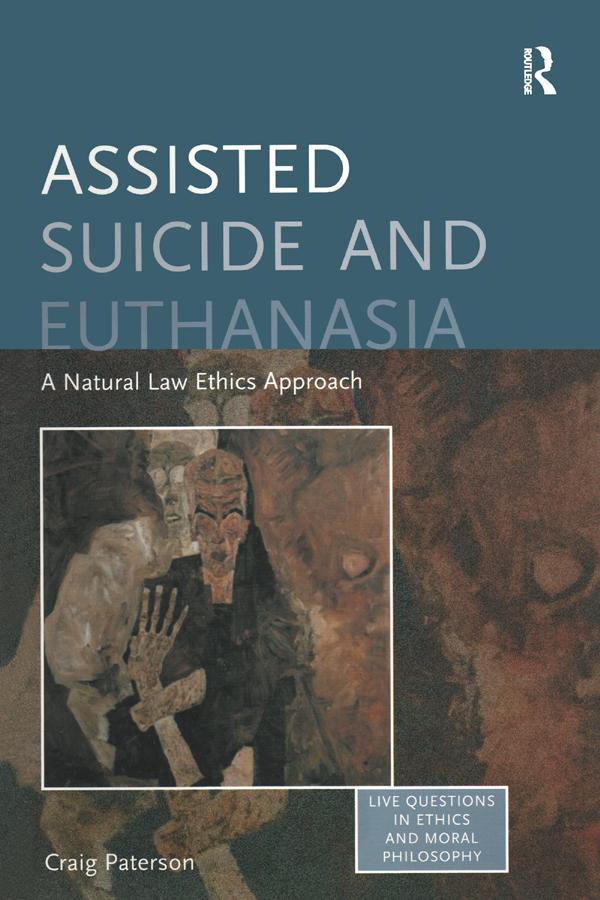
As medical technology advances and severely injured or ill people can be kept alive and functioning long beyond what was previously medically possible, the debate surrounding the ethics of end-of-life care and quality-of-life issues has grown more urgent.In this lucid and vigorous new book, Craig Paterson discusses assisted suicide and euthanasia from a fully fledged but non-dogmatic secular natural law perspective. He rehabilitates and revitalises the natural law approach to moral reasoning by developing a pluralistic account of just why we are required by practical rationality to respect and not violate key demands generated by the primary goods of persons, especially human life.Important issues that shape the moral quality of an action are explained and analysed: intention/foresight; action/omission; action/consequences; killing/letting die; innocence/non-innocence; and, person/non-person. Paterson defends the central normative proposition that 'it is always a serious moral wrong to intentionally kill an innocent human person, whether self or another, notwithstanding any further appeal to consequences or motive'.
Płać wygodnie kartą, Klarną, Apple Pay lub Google Pay. Nie jesteś zadowolony? Zawsze masz 14-dniową gwarancję zwrotu pieniędzy. Więcej przeczytasz w naszych warunkach. Masz pytania? Napisz do nas na hello@memmo.org.
Memmo ułatwia naukę – gdziekolwiek jesteś na świecie. U nas znajdziesz podręczniki i sprytne narzędzia do nauki w jednym miejscu: streszczenia, quizy, podcasty i fiszki. A do tego Ted, Twój kumpel do nauki, który odpowie na wszystko, co Cię nurtuje. Ponad 50 000 studentów już tu się uczy – stworzone, byś uczył się szybciej i mniej stresował.
Może Ci się spodobać
Kup książkę0