
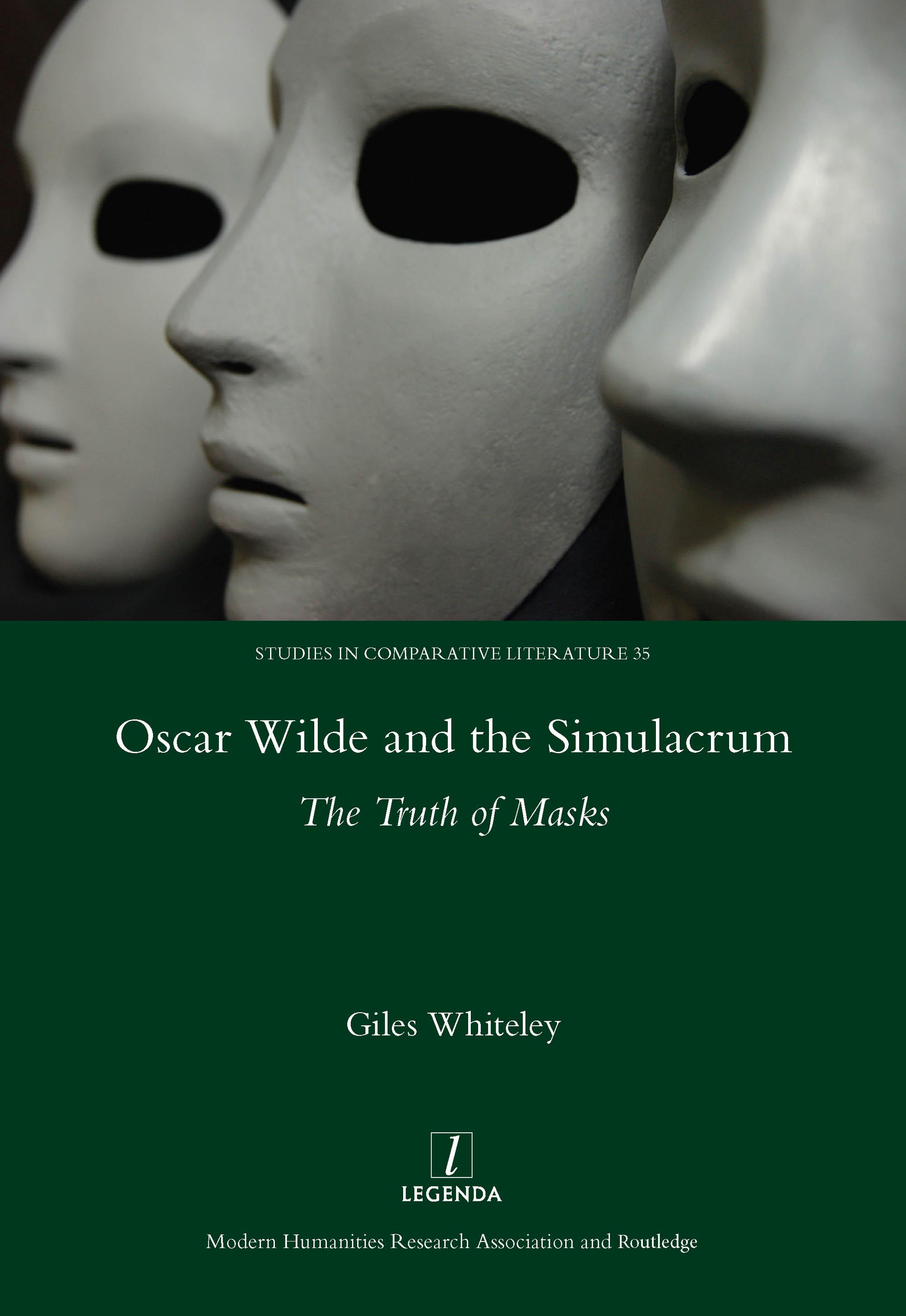
Oscar Wilde is more than a name, more than an author. From precocious Oxford undergraduate to cause celebre of the West End of the 1890s, to infamous criminal, the proper name Wilde has become an event in the history of literature and culture. Taking Wilde seriously as a philosopher in his own right, Whiteley's groundbreaking book places his texts into their philosophical context in order to show how Wilde broke from his peers, and in particular from idealism, and challenges recent neo-historicist readings of Wilde which seem content to limit his irruptive power. Using the paradoxical concept of the simulacrum to resituate Wilde's work in relation to both his precursors and his contemporaries, Whiteley's study reads Wilde through Deleuze and postmodern philosophical commentary on the simulacrum. In a series of striking juxtapositions, Whiteley challenges us to rethink both Oscar Wilde's aesthetics and his philosophy, to take seriously both the man and the mask. His philosophy of masks is revealed to figure a truth of a different kind - the simulacra through which Wilde begins to develop and formulate a mature philosophy that constitutes an ethics of joy.
Płać wygodnie kartą, Klarną, Apple Pay lub Google Pay. Nie jesteś zadowolony? Zawsze masz 14-dniową gwarancję zwrotu pieniędzy. Więcej przeczytasz w naszych warunkach. Masz pytania? Napisz do nas na hello@memmo.org.
Memmo ułatwia naukę – gdziekolwiek jesteś na świecie. U nas znajdziesz podręczniki i sprytne narzędzia do nauki w jednym miejscu: streszczenia, quizy, podcasty i fiszki. A do tego Ted, Twój kumpel do nauki, który odpowie na wszystko, co Cię nurtuje. Ponad 50 000 studentów już tu się uczy – stworzone, byś uczył się szybciej i mniej stresował.
Może Ci się spodobać
Kup książkę0