
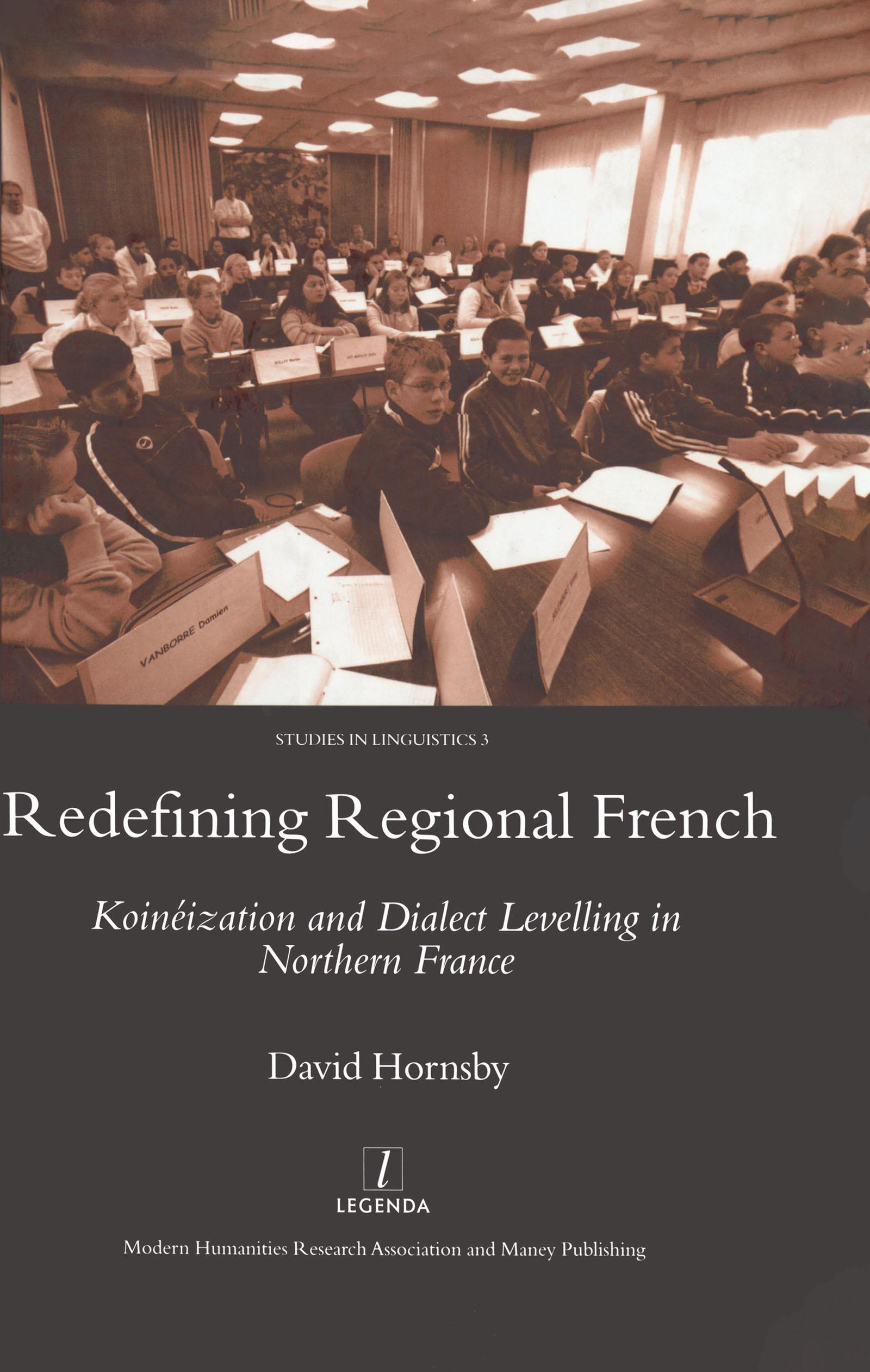
This study challenges the orthodox view that emergent regional varieties of French represent no more than an ephemeral dialect residue of little theoretical interest. It follows the life cycle of an obsolescent urban Picard variety, spoken in a mining town in the Pas-de-Calais, and attempts to unravel the complex reasons behind the survival of some local variants at the expense of others. Applying a sociolinguistic model developed by Peter Trudgill, it shows how the processes of levelling and simplification have driven change in a dialect contact situation, giving rise to a new, stable variety or koine. This is compared with other new urban varieties in Sweden and the UK, where different economic, social and demographic conditions have produced very different linguistic outcomes. The emergence of Regional French in the north, it is argued, may herald the start of a new diversification of French in Europe. This book will therefore interest both students of French and of language variation more generally.
Płać wygodnie kartą, Klarną, Apple Pay lub Google Pay. Nie jesteś zadowolony? Zawsze masz 14-dniową gwarancję zwrotu pieniędzy. Więcej przeczytasz w naszych warunkach. Masz pytania? Napisz do nas na hello@memmo.org.
Memmo ułatwia naukę – gdziekolwiek jesteś na świecie. U nas znajdziesz podręczniki i sprytne narzędzia do nauki w jednym miejscu: streszczenia, quizy, podcasty i fiszki. A do tego Ted, Twój kumpel do nauki, który odpowie na wszystko, co Cię nurtuje. Ponad 50 000 studentów już tu się uczy – stworzone, byś uczył się szybciej i mniej stresował.
Może Ci się spodobać
Kup książkę0