
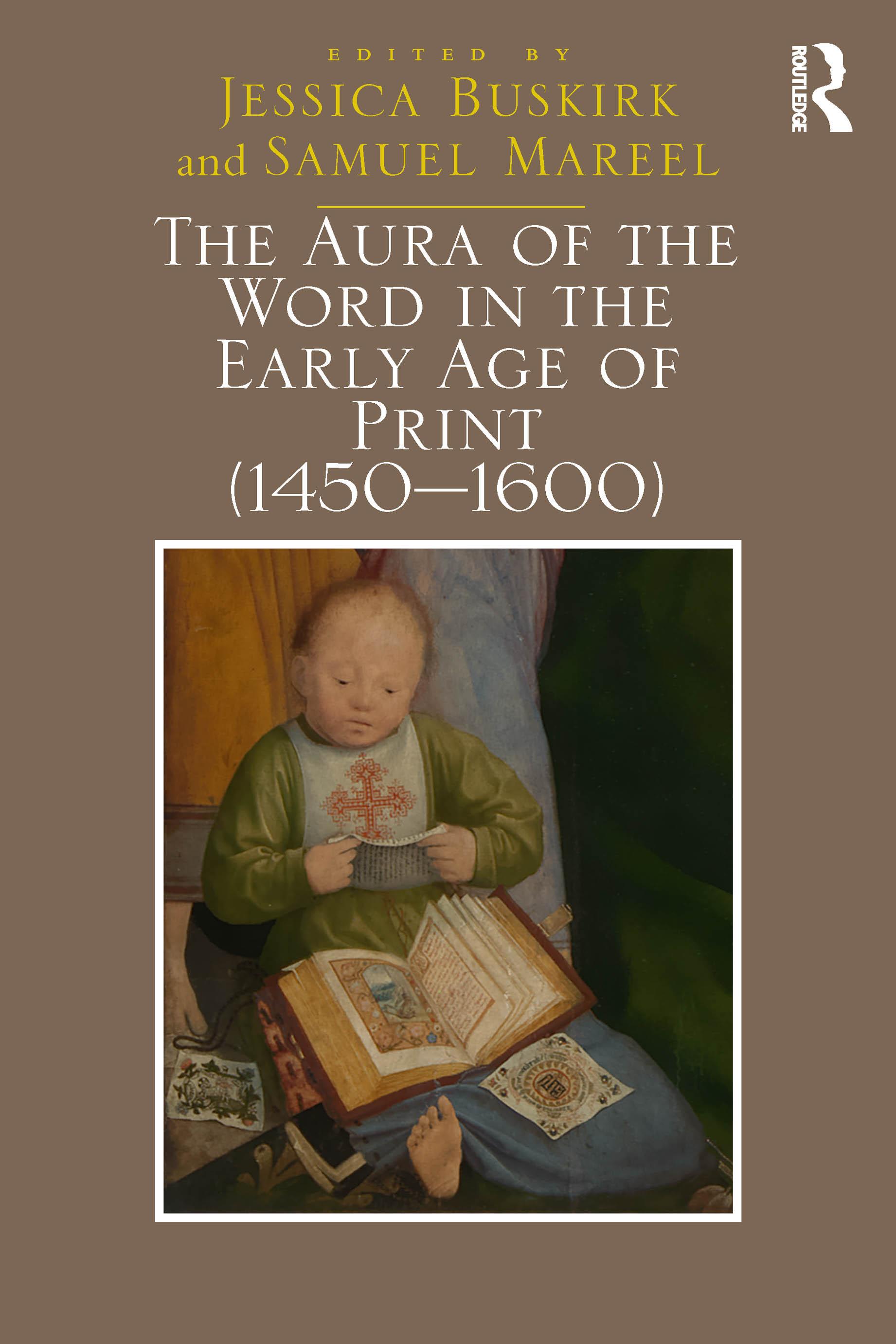
Did the invention of movable type change the way that the word was perceived in the early modern period? In his groundbreaking essay "The Work of Art in the Age of Mechanical Reproduction," the cultural critic Walter Benjamin argued that reproduction drains the image of its aura, by which he means the authority that a work of art obtains from its singularity and its embeddedness in a particular context. The central question in The Aura of the Word in the Early Age of Print (1450-1600) is whether the dissemination of text through print had a similar effect on the status of the word in the early modern period. In this volume, contributors from a variety of fields look at manifestations of the early modern word (in English, French, Latin, Dutch, German and Yiddish) as entities whose significance derived not simply from their semantic meaning but also from their relationship to their material support, to the physical context in which they are located and to the act of writing itself. Rather than viewing printed text as functional and lacking in materiality, contributors focus on how the placement of a text could affect its meaning and significance. The essays also consider the continued vitality of pre-printing-press kinds of text such as the illuminated manuscript; and how new practices, such as the veneration of handwriting, sprung up in the wake of the invention of movable type.
Strony: 232
Kategoria: Litteraturvetenskap & Teori
e-ISBN: 9781351546096
Waga przesyłki: 1.2 kg
Wysyłka w ciągu: 1-2 dni
Płać wygodnie kartą, Klarną, Apple Pay lub Google Pay. Nie jesteś zadowolony? Zawsze masz 14-dniową gwarancję zwrotu pieniędzy. Więcej przeczytasz w naszych warunkach. Masz pytania? Napisz do nas na hello@memmo.org.
Memmo ułatwia naukę – gdziekolwiek jesteś na świecie. U nas znajdziesz podręczniki i sprytne narzędzia do nauki w jednym miejscu: streszczenia, quizy, podcasty i fiszki. A do tego Ted, Twój kumpel do nauki, który odpowie na wszystko, co Cię nurtuje. Ponad 50 000 studentów już tu się uczy – stworzone, byś uczył się szybciej i mniej stresował.
Może Ci się spodobać
Kup książkę0