
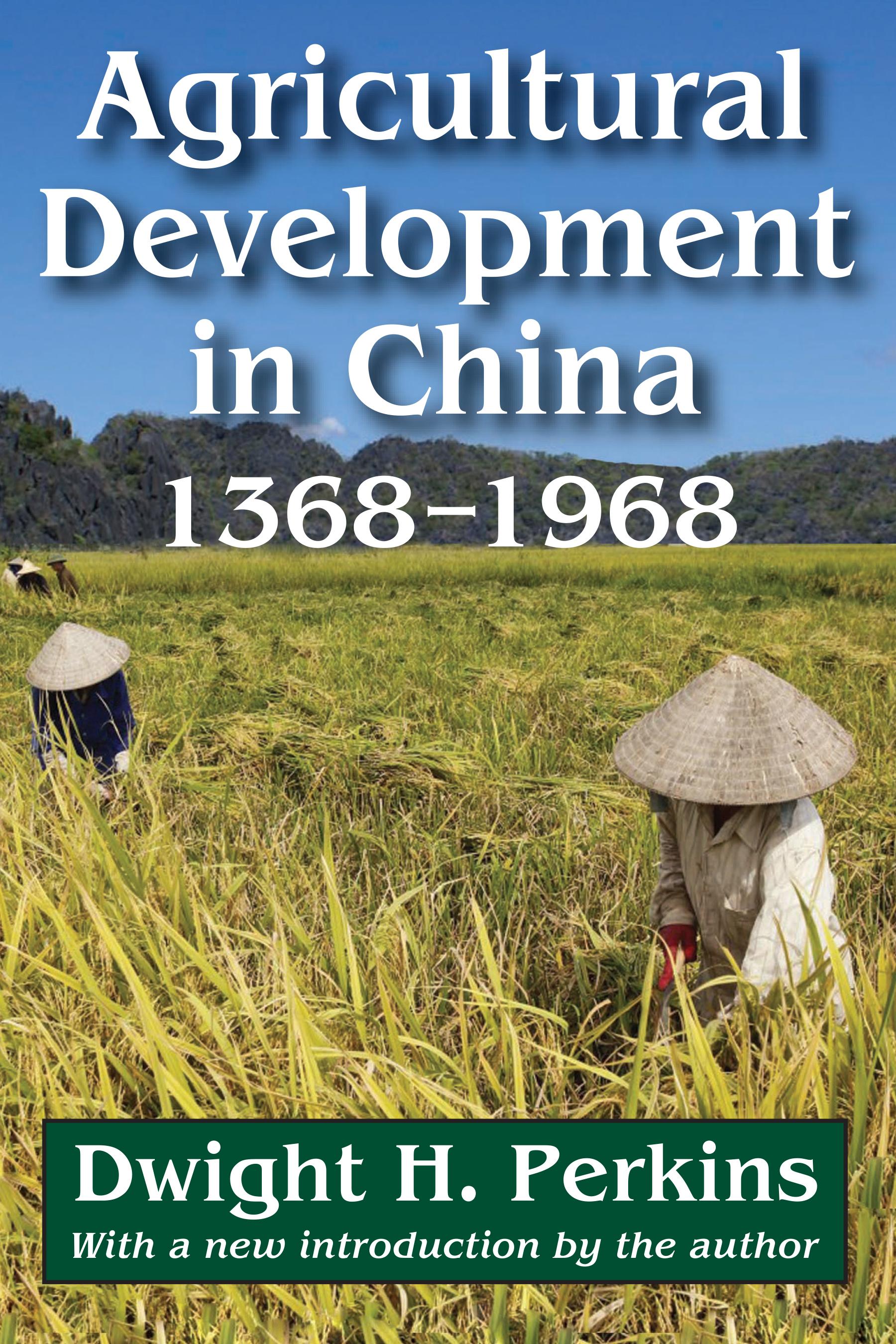
Agricultural Development in China explains how China's farm economy historically responded to the demands of a rising population. Dwight H. Perkins begins in the year A.D. 1368, the founding date of the Ming dynasty. More importantly, it marked the end of nearly two centuries of violent destruction and loss of life primarily connected with the rise and fall of the Mongols. The period beginning with the fourteenth century was also one in which there were no obvious or dramatic changes in farming techniques or in rural institutions. The rise in population and hence in the number of farmers made possible the rise in farm output through increased double cropping, extending irrigation systems, and much else.
Issues explored in this book include the role of urbanization and long distance trade in allowing farmers in a few regions to specialize in crops most suitable to their particular region. Backing up this analysis of agricultural development is a careful examination of the quality of Chinese historical data. This classic volume, now available in a paperback edition, includes a new introduction assessing the continuing importance of this work to understanding the Chinese economy. It will be invaluable for a new generation of economists, historians, and Asian studies specialists and is part of Transaction's Asian Studies series.
Płać wygodnie kartą, Klarną, Apple Pay lub Google Pay. Nie jesteś zadowolony? Zawsze masz 14-dniową gwarancję zwrotu pieniędzy. Więcej przeczytasz w naszych warunkach. Masz pytania? Napisz do nas na hello@memmo.org.
Memmo ułatwia naukę – gdziekolwiek jesteś na świecie. U nas znajdziesz podręczniki i sprytne narzędzia do nauki w jednym miejscu: streszczenia, quizy, podcasty i fiszki. A do tego Ted, Twój kumpel do nauki, który odpowie na wszystko, co Cię nurtuje. Ponad 50 000 studentów już tu się uczy – stworzone, byś uczył się szybciej i mniej stresował.