
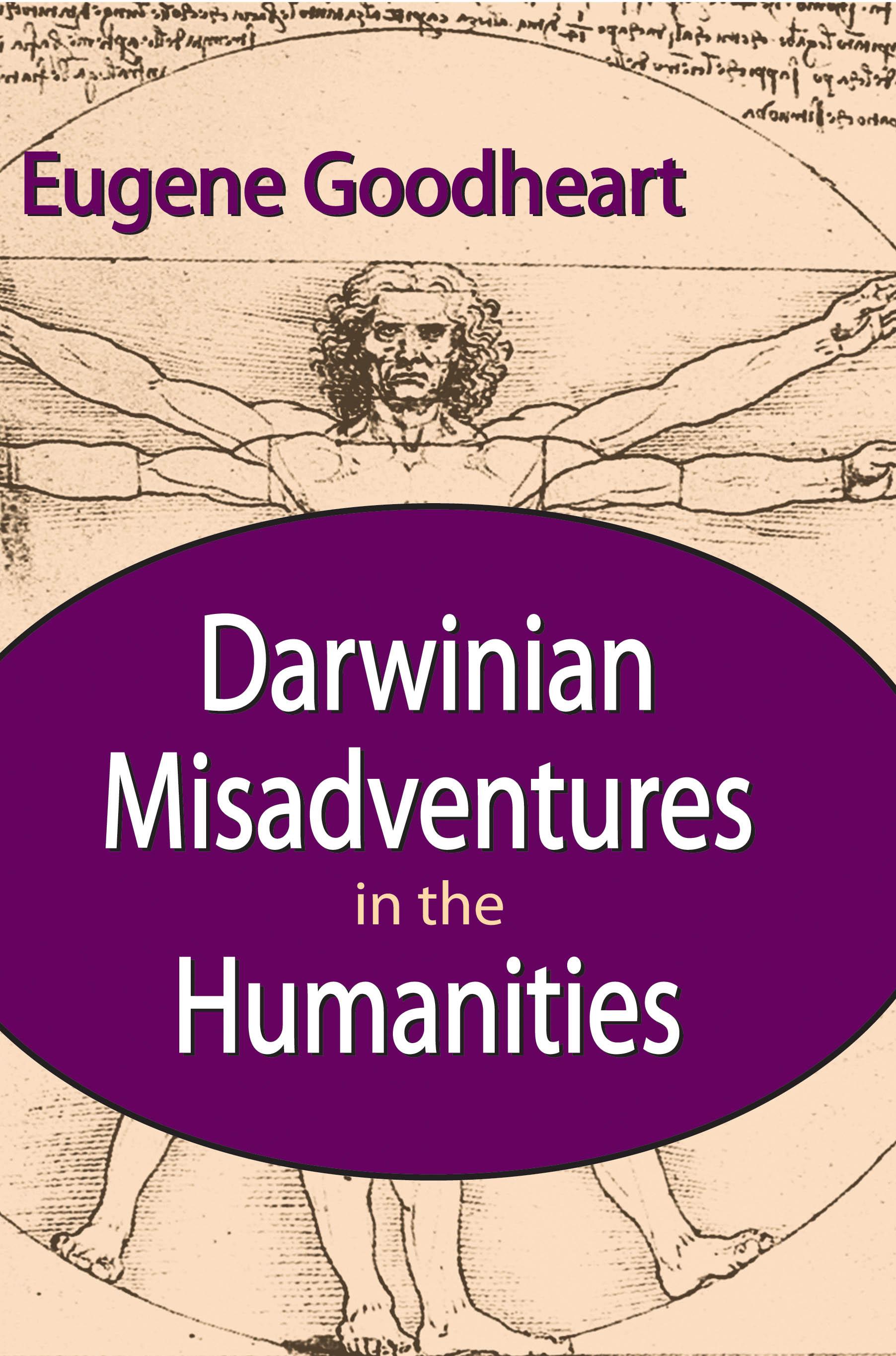
In recent decades the humanities have been in thrall to postmodern skepticism, while Darwinists, brimming with confidence in the genuine progress they have made in the sciences of biology and psychology, have set their sights on rescuing the humanities from the ravages of postmodernism. In this volume, Eugene Goodheart attacks the neo-Darwinist approach to the arts and articulates a powerful defense of humanist criticism.
E. O. Wilson, the distinguished Harvard biologist, has spoken of converting philosophy into science, substituting science for religion, and formulating a biological theory of literature and the arts in Consilence: The Unity of Knowledge. Goodheart demonstrates that Wilson's efforts, and those of his colleagues Richard Dawkins, Steven Pinker, and Daniel Dennett among others, have resulted in scientism rather than science. If, for example, Dawkins had contented himself in The Selfish Gene with the claim that Darwinism had made worthless other answers to the question of how we have evolved, he would have given offense only to creationists, but questions of meaning and purpose are of another order.
Contemporary Darwinist critiques err in assuming that art and traditional criticism aspire to truths that can be codified in terms of scientific laws. If this were so, we would have to regard the speculations of Plato, Aristotle, Augustine, Montaigne, Shakespeare, and Rousseau as worthless. Goodheart exposes the philistinism of literary Darwinism, the bad faith and inverted fundamentalism of the Darwinian approach to religion, and the dangers of the eff ort to create a Darwinian ethical system. Taken together, Goodheart's arguments show that in moving beyond their area of competence, the neo -Darwinists commit an ideology, not a science.
Płać wygodnie kartą, Klarną, Apple Pay lub Google Pay. Nie jesteś zadowolony? Zawsze masz 14-dniową gwarancję zwrotu pieniędzy. Więcej przeczytasz w naszych warunkach. Masz pytania? Napisz do nas na hello@memmo.org.
Memmo ułatwia naukę – gdziekolwiek jesteś na świecie. U nas znajdziesz podręczniki i sprytne narzędzia do nauki w jednym miejscu: streszczenia, quizy, podcasty i fiszki. A do tego Ted, Twój kumpel do nauki, który odpowie na wszystko, co Cię nurtuje. Ponad 50 000 studentów już tu się uczy – stworzone, byś uczył się szybciej i mniej stresował.