
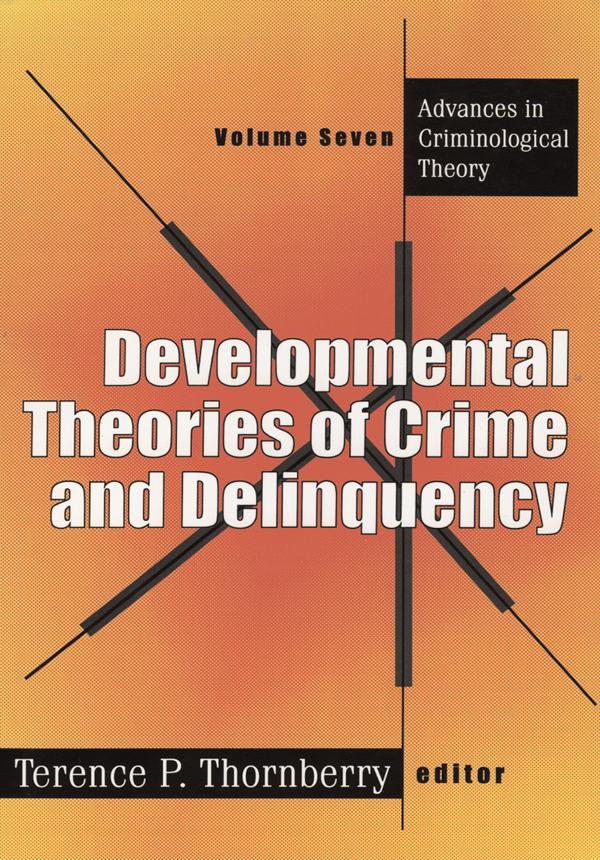
In Developmental Theories of Crime and Delinquency, Terence P. Thornberry and his contributors show that criminal behavior is not a static human attribute, but ebbs and flows over the life course of the individual. Criminal behavior tends to follow a distinct psychological pattern. It is relatively uncommon during childhood, is initiated by most offenders during adolescence, flourishes during late adolescence and early childhood, and usually diminishes or disappears by the mid-twenties. This pattern is not characteristic of all people--some never commit crimes and others become career criminals--but it is a general description of the developmental pattern of criminal offenders. This pattern has profound implications for theories of crime and delinquency. Not only does it explain initiation into, maintenance of, and desistance from involvement in crime, it offers insight into why crime flourishes during adolescence. Traditional theories of crime and delinquency have often failed to distinguish among different phases of criminal careers. They tend to ignore developmental changes that occur across a person's life course, changes that coincide with and can explain the causes and patterns of criminal behavior. This paperback edition of the seventh volume of the distinguished series Advances in Criminological Theory moves us from static identifications of the criminal by presenting a broad range of developmental explanations of crime. Each contributor articulates a developmental or life course perspective in explaining how people become involved in delinquency and crime. Each covers a wide range of theoretical territory and reveals how a developmental perspective enhances the explanatory power of traditional theories of crime and delinquency. This volume is an invaluable tool for criminologists, sociologists, psychologists, and other professionals seeking to teach how crime and violence can be understood in our culture.
Płać wygodnie kartą, Klarną, Apple Pay lub Google Pay. Nie jesteś zadowolony? Zawsze masz 14-dniową gwarancję zwrotu pieniędzy. Więcej przeczytasz w naszych warunkach. Masz pytania? Napisz do nas na hello@memmo.org.
Memmo ułatwia naukę – gdziekolwiek jesteś na świecie. U nas znajdziesz podręczniki i sprytne narzędzia do nauki w jednym miejscu: streszczenia, quizy, podcasty i fiszki. A do tego Ted, Twój kumpel do nauki, który odpowie na wszystko, co Cię nurtuje. Ponad 50 000 studentów już tu się uczy – stworzone, byś uczył się szybciej i mniej stresował.