
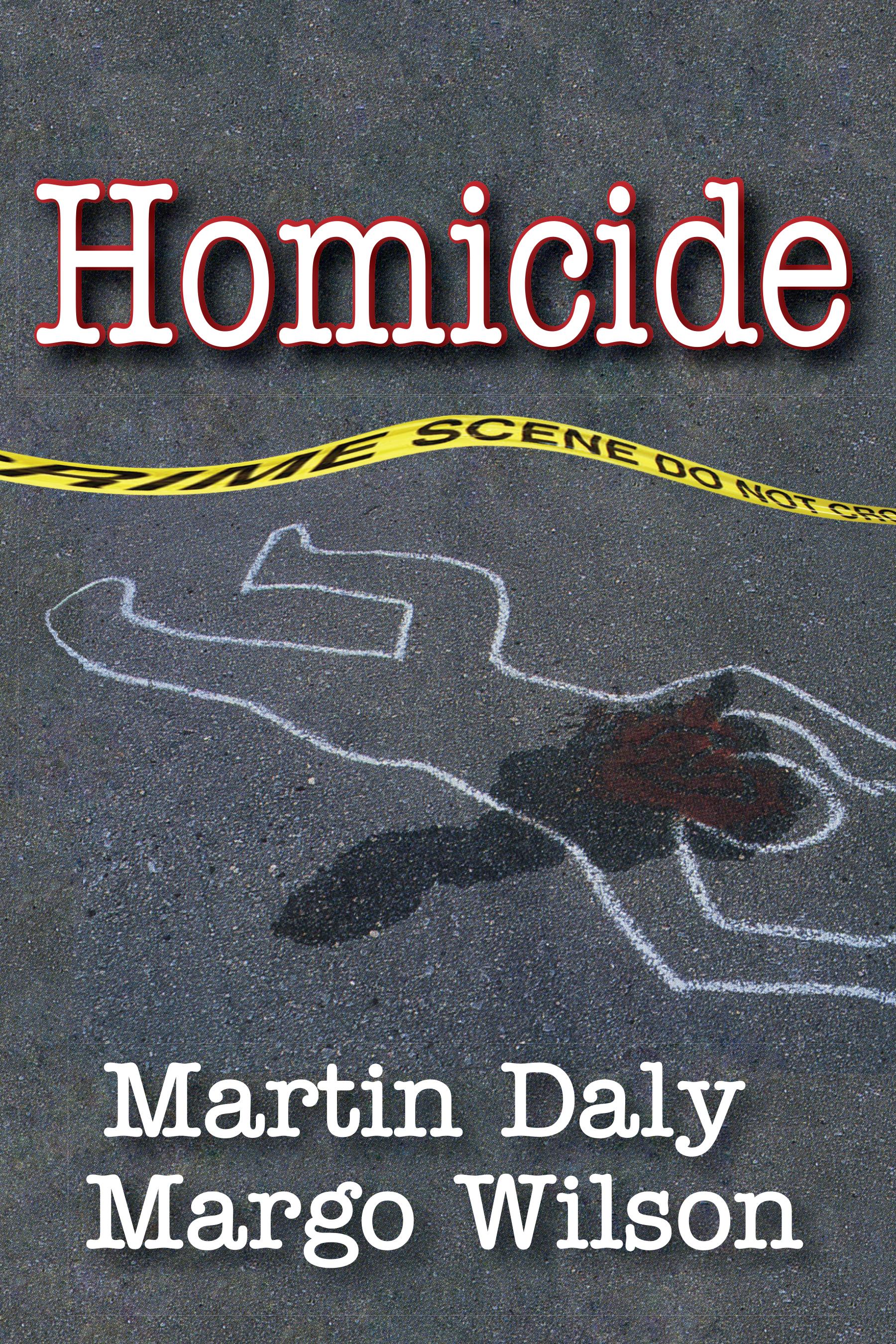
The human race spends a disproportionate amount of attention, money, and expertise in solving, trying, and reporting homicides, as compared to other social problems. The public avidly consumes accounts of real-life homicide cases, and murder fiction is more popular still. Nevertheless, we have only the most rudimentary scientific understanding of who is likely to kill whom and why. Martin Daly and Margo Wilson apply contemporary evolutionary theory to analysis of human motives and perceptions of self-interest, considering where and why individual interests conflict, using well-documented murder cases. This book attempts to understand normal social motives in murder as products of the process of evolution by natural selection. They note that the implications for psychology are many and profound, touching on such matters as parental affection and rejection, sibling rivalry, sex differences in interests and inclinations, social comparison and achievement motives, our sense of justice, lifespan developmental changes in attitudes, and the phenomenology of the self. This is the first volume of its kind to analyze homicides in the light of a theory of interpersonal conflict. Before this study, no one had compared an observed distribution of victim-killer relationships to "expected" distribution, nor asked about the patterns of killer-victim age disparities in familial killings. This evolutionary psychological approach affords a deeper view and understanding of homicidal violence.
Płać wygodnie kartą, Klarną, Apple Pay lub Google Pay. Nie jesteś zadowolony? Zawsze masz 14-dniową gwarancję zwrotu pieniędzy. Więcej przeczytasz w naszych warunkach. Masz pytania? Napisz do nas na hello@memmo.org.
Memmo ułatwia naukę – gdziekolwiek jesteś na świecie. U nas znajdziesz podręczniki i sprytne narzędzia do nauki w jednym miejscu: streszczenia, quizy, podcasty i fiszki. A do tego Ted, Twój kumpel do nauki, który odpowie na wszystko, co Cię nurtuje. Ponad 50 000 studentów już tu się uczy – stworzone, byś uczył się szybciej i mniej stresował.
Może Ci się spodobać
Kup książkę0