
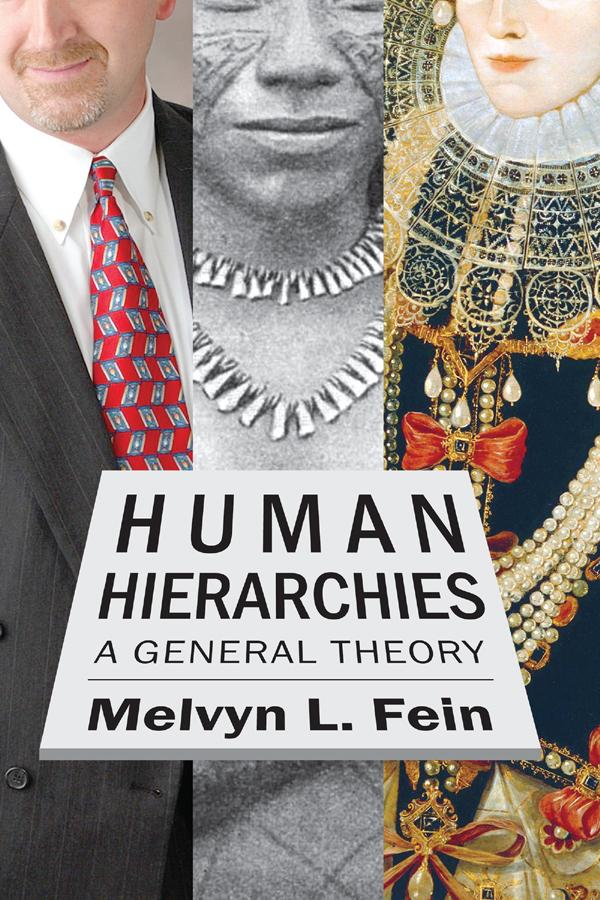
Human beings are hierarchical animals. Always and everywhere, people have developed social ranking systems. These differ dramatically in how they are organized, but the underlying causal mechanisms that create and sustain them are the same. Whether they are on the top or bottom of the heap, people attempt to be superior to some other persons or group. This is the root of Melvyn L. Fein's thesis presented in Human Hierarchies: A General Theory. Fein traces the development of changes from hunter-gatherer times to our own techno-commercial society. In moving from small to large communities, humans went from face-to-face contests for superiority to more anonymous and symbolic ones. Societies evolved from hunting bands where the parties knew each other through big-men societies, chieftainships, agrarian empires, patronage chains, caste societies, estate systems, and market-oriented democracies. Where once small groupings were organized primarily by strong forces such as personal relationships, the now standard large groupings are more dependent on weaker forces such as those provided by social roles. Bureaucracies and professional roles have become prominent. Bureaucracies allow large-scale organizations to maintain control of people by limiting the potential destructiveness of unregulated tests of strength and by clarifying chains of command. Their rigidity and unresponsiveness requires that they be supplemented by professional roles. At the same time, a proliferation of self-motivated experts delegate authority downward, thereby introducing a more flexible decentralization. This analysis is a unique and significant advance in both the sociology and anthropology of stratification among humans.
Płać wygodnie kartą, Klarną, Apple Pay lub Google Pay. Nie jesteś zadowolony? Zawsze masz 14-dniową gwarancję zwrotu pieniędzy. Więcej przeczytasz w naszych warunkach. Masz pytania? Napisz do nas na hello@memmo.org.
Memmo ułatwia naukę – gdziekolwiek jesteś na świecie. U nas znajdziesz podręczniki i sprytne narzędzia do nauki w jednym miejscu: streszczenia, quizy, podcasty i fiszki. A do tego Ted, Twój kumpel do nauki, który odpowie na wszystko, co Cię nurtuje. Ponad 50 000 studentów już tu się uczy – stworzone, byś uczył się szybciej i mniej stresował.
Może Ci się spodobać
Kup książkę0