
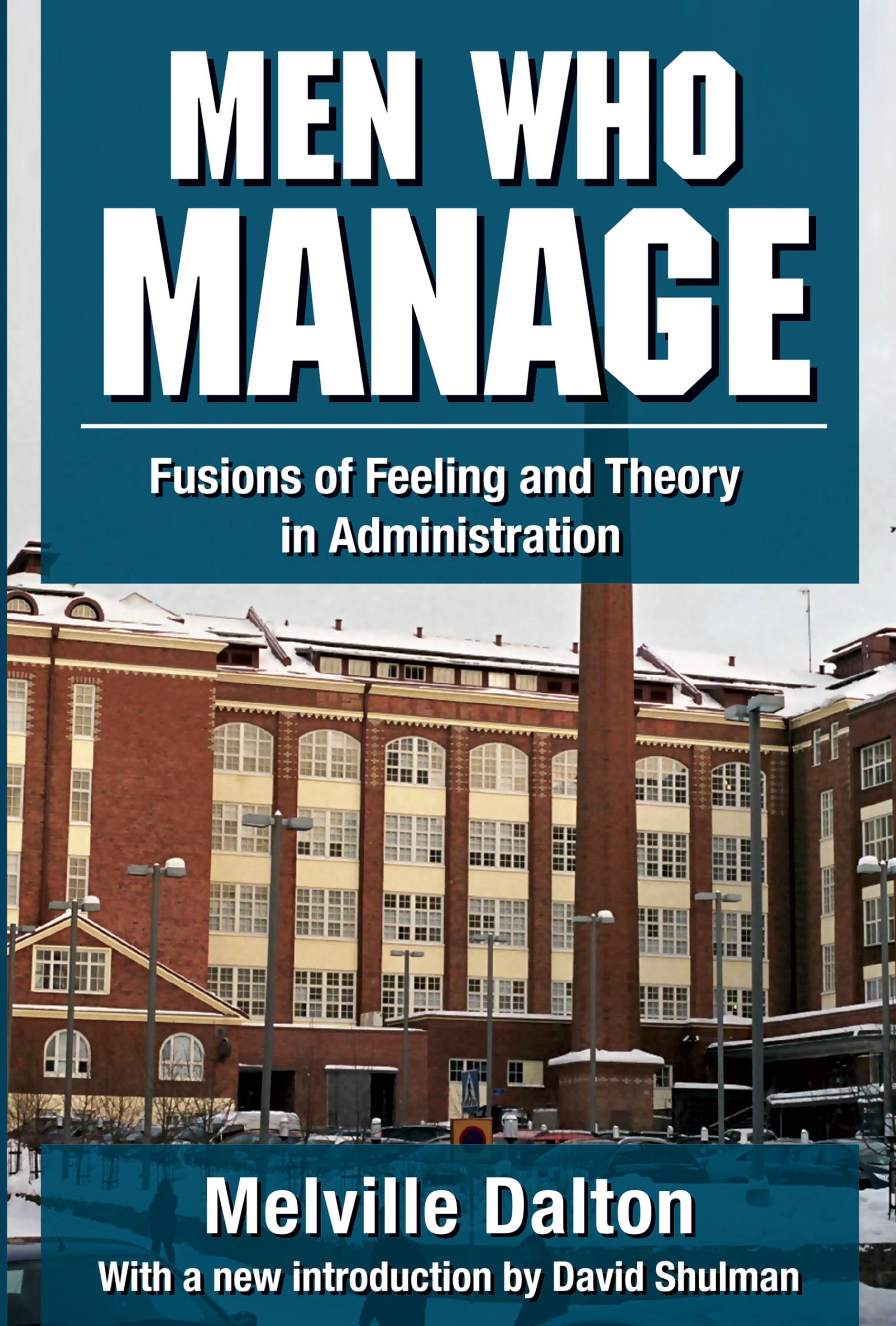
This is a classic study of how managers interpret and engage problems as they are experienced and felt at various points and levels in factories and businesses. Melville Dalton, drawing on ethnographic data, examines both positive and negative interactions among managers, between managers and between workers, and managers and firms. He discusses the consequences for each group that result from their interactions. Where relevance and data allow, Dalton relates his findings to the surrounding community.
Dalton argues that the recurring problem areas in management grow out of six main areas: pressures for economy of operation; "cooperation" of officially powerless experts with their administrative superiors; local conflicts between union and management; uncertainty about the route to a place in middle and upper management; the task of recognizing and rewarding differential contributions; and the moral conflicts of the individual executive. Each of these six problem areas is made the subject of a chapter.
What emerges is a study of compromises among key individuals and groups in business organizations, and of the strictures on compromise. The book offers insights into how workplace rules, in practice, move from being sacred guides to flexible tools to balance company goals and personal ends. This volume includes a new introduction by David Shulman detailing the importance of this work more than forty years after its original publication. It is part of Transaction's Organization and Business series.
Płać wygodnie kartą, Klarną, Apple Pay lub Google Pay. Nie jesteś zadowolony? Zawsze masz 14-dniową gwarancję zwrotu pieniędzy. Więcej przeczytasz w naszych warunkach. Masz pytania? Napisz do nas na hello@memmo.org.
Memmo ułatwia naukę – gdziekolwiek jesteś na świecie. U nas znajdziesz podręczniki i sprytne narzędzia do nauki w jednym miejscu: streszczenia, quizy, podcasty i fiszki. A do tego Ted, Twój kumpel do nauki, który odpowie na wszystko, co Cię nurtuje. Ponad 50 000 studentów już tu się uczy – stworzone, byś uczył się szybciej i mniej stresował.