
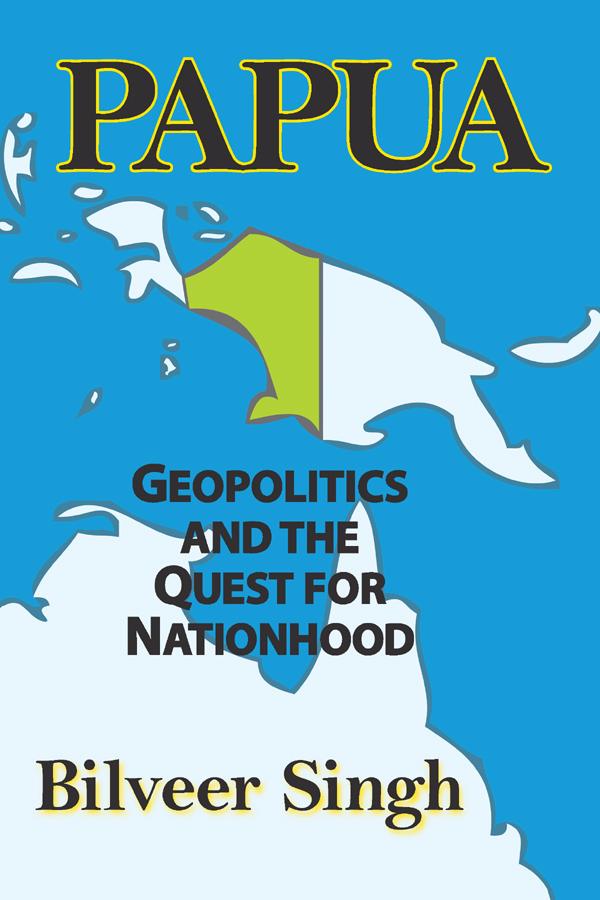
The Papuan conflict has been on the international radar screen since Indonesia became an independent state in 1945. Since the surrender of the territory of Papua to Indonesia in 1962, a low-intensity military conflict has been building. Most Papuans believed that their right to self-determination was sacrificed on the altar of geopolitics. Later, when East Timor seceded peacefully from Indonesia, Papuans expected the same right. When this did not happen, the conflict intensified. In this pivotal work, Bilveer Singh examines the history of the Papuan struggle, and approaches to conflict resolution through the framework of its geopolitical implications. Asserting that the Papuans were treated unjustly by Indonesia and the international community, it is not surprising that many have come down squarely on the side of Papuan independence as a way out of the imbroglio. While to some extent the Papuan's case cannot be denied, definite political and strategic realities should not be ignored. Unfortunately for the Papuans, their territory has immense geopolitical, geostrategic, and economic significance - not only for Indonesia, but also for others such as the United States, China, Australia, and a number of European countries. Papua is wealthy, under-populated and backward in terms of human resource development. Its future as a distinct entity is in real danger as the Papuans are becoming the minority in their own homeland. Due to the asymmetry of power, the Papuans' struggle has not made a breakthrough that would force Indonesia to rethink the future of the territory in any fundamental way. In order to unravel the dynamics involving Papuan separatism, this study describes the Papuan political landscape. Singh explains what makes Papua unique, and how its makeup has affected the territory's political dynamics. He analyzes the emergence of Papua as a geopolitical trophy, calling into question the degree to which Papuan nationalism has crystallized. Finally, he questions whether Papua is emerging as a regional flashpoint, and, in view of its geopolitical importance, the various options available. "Papua: Geopolitics and the Quest for Nationhood" will be of interest to scholars of international relations, comparative politics of Indonesia and the Asia-Pacific, and policymaking.
Strony: 260
Kategoria: Statsvetenskap & Politik
e-ISBN: 9781351500944
Waga przesyłki: 1.2 kg
Wysyłka w ciągu: 1-2 dni
Płać wygodnie kartą, Klarną, Apple Pay lub Google Pay. Nie jesteś zadowolony? Zawsze masz 14-dniową gwarancję zwrotu pieniędzy. Więcej przeczytasz w naszych warunkach. Masz pytania? Napisz do nas na hello@memmo.org.
Memmo ułatwia naukę – gdziekolwiek jesteś na świecie. U nas znajdziesz podręczniki i sprytne narzędzia do nauki w jednym miejscu: streszczenia, quizy, podcasty i fiszki. A do tego Ted, Twój kumpel do nauki, który odpowie na wszystko, co Cię nurtuje. Ponad 50 000 studentów już tu się uczy – stworzone, byś uczył się szybciej i mniej stresował.
Może Ci się spodobać
Kup książkę0