
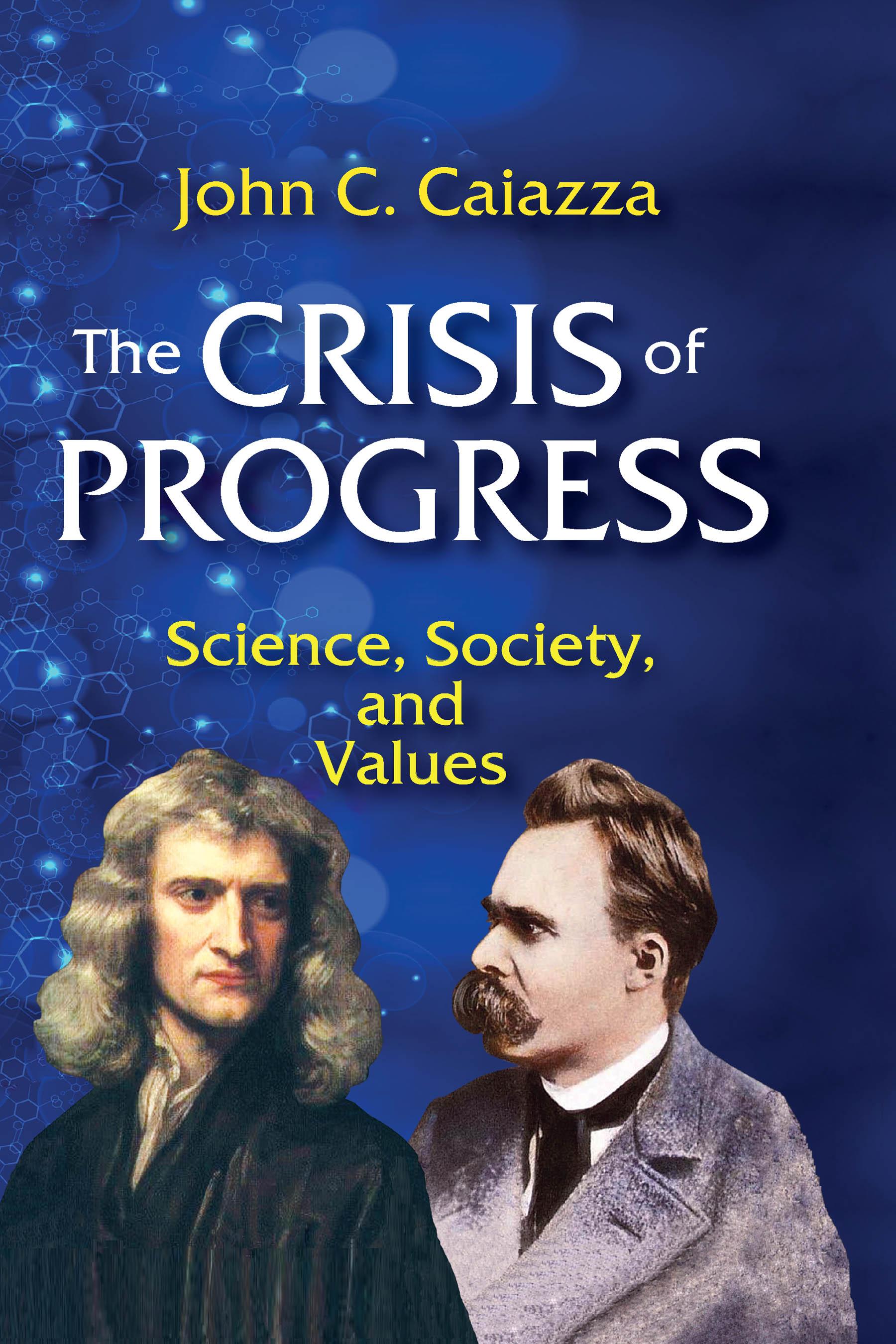
This book is about the concept of progress, its separate varieties, its current rejection, and how it may be reconsidered from a philosophical and scientific basis. John C. Caiazza's main emphasis is on how science is understood as it has a direct impact on social values as expressed by prominent philosophers. He argues that progress is at a standstill, which presents a crisis for Western civilization.Caiazza presents historical examples, both of scientific inquiry and social and cultural themes, to examine the subject of progress. Beginning with the Whig model and progressive political values exemplified by Bacon and Dewey, he also examines other variations, the Enlightenment, cosmopolitanism, and totalitarianism. Technology, argues Caiazza, also has a stultifying effect on Western culture and to understand the idea of progress, we must take a philosophic rather than a scientific point of view. Modern cosmology has inevitable humanistic and theological implications, and major contemporary philosophers reject social science in favour of ancient concepts of virtue and ethics.In the end, Caiazza writes that time is an agent, not a neutral plain on which scientific and historical events occur. We can expect technology to keep us in stasis or become aware of the possibility of transcendence. This book will be of interest for students of scientific history and philosophy.
Płać wygodnie kartą, Klarną, Apple Pay lub Google Pay. Nie jesteś zadowolony? Zawsze masz 14-dniową gwarancję zwrotu pieniędzy. Więcej przeczytasz w naszych warunkach. Masz pytania? Napisz do nas na hello@memmo.org.
Memmo ułatwia naukę – gdziekolwiek jesteś na świecie. U nas znajdziesz podręczniki i sprytne narzędzia do nauki w jednym miejscu: streszczenia, quizy, podcasty i fiszki. A do tego Ted, Twój kumpel do nauki, który odpowie na wszystko, co Cię nurtuje. Ponad 50 000 studentów już tu się uczy – stworzone, byś uczył się szybciej i mniej stresował.
Może Ci się spodobać
Kup książkę0