
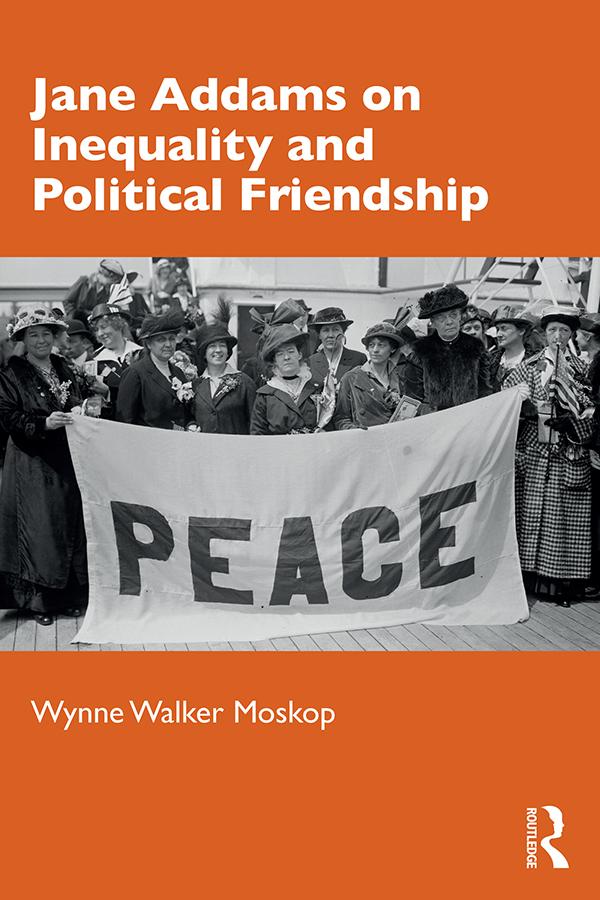
In this book, Wynne Walker Moskop addresses the practical and theoretical problem of how unequal political friendships evolve toward arrangements the parties consider reciprocal and just, a problem neglected by scholars of democracy who associate reciprocity and justice only with equal parties. Jane Addams insisted that Hull House was not a charity with philanthropic aspirations; rather it had to bring “two classes” to a shared purpose and more egalitarian relation. The problem was, and still is, how?
Drawing on several bodies of scholarship—including Addams’s writings, secondary works about her collaborations, literature on Aristotelian political friendship, and feminist scholarship on the global migration of care workers—Moskop shows the importance of Addams’s practices to the continuing relevance of unequal economic relations for shaping political friendship.
Contributing to a lively conversation about Addams’s work as a pragmatist thinker and social reformer that began three decades ago, Jane Addams on Inequality and Political Friendship is an invaluable resource to students of democratic theory, feminist political theory and philosophy, and American pragmatism. It illuminates the importance of overlooked conditions for friendship and justice in unequal relations, given people’s ongoing subordination because of race, class, gender, and citizenship status in the U.S. and transnationally.
Płać wygodnie kartą, Klarną, Apple Pay lub Google Pay. Nie jesteś zadowolony? Zawsze masz 14-dniową gwarancję zwrotu pieniędzy. Więcej przeczytasz w naszych warunkach. Masz pytania? Napisz do nas na hello@memmo.org.
Memmo ułatwia naukę – gdziekolwiek jesteś na świecie. U nas znajdziesz podręczniki i sprytne narzędzia do nauki w jednym miejscu: streszczenia, quizy, podcasty i fiszki. A do tego Ted, Twój kumpel do nauki, który odpowie na wszystko, co Cię nurtuje. Ponad 50 000 studentów już tu się uczy – stworzone, byś uczył się szybciej i mniej stresował.