
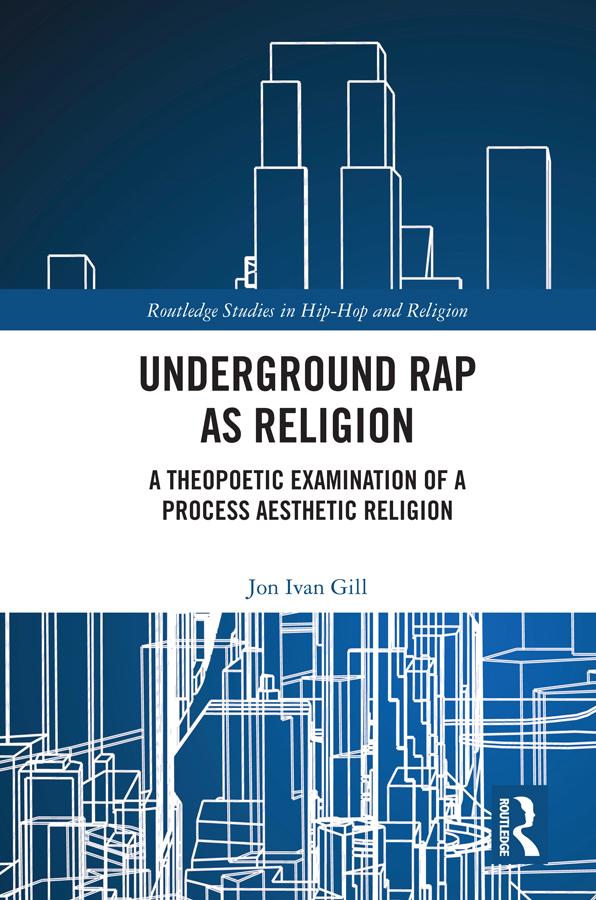
Underground rap is largely a subversive, grassroots, and revolutionary movement in underground hip-hop, tending to privilege creative freedom as well as progressive and liberating thoughts and actions. This book contends that many practitioners of underground rap have absorbed religious traditions and ideas, and implement, critique, or abandon
them in their writings. This in turn creates processural mutations of God that coincide with and speak to the particular context from which they originate.
Utilising the work of scholars like Monica Miller and Alfred North Whitehead, Gill uses a secular religious methodology to put forward an aesthetic philosophy of religion for the rap portion of underground hip-hop. Drawing from Whiteheadian process thought, a theopoetic
argument is made. Namely, that it is not simply the case that is God the "poet of the world", but rather rap can, in fact, be the poet (creator) of its own form of quasi-religion.
This is a unique look at the religious workings and implications of underground rap and hip hop. As such, it will be of keen interest to scholars of Religious Studies, Hip-Hop Studies and Process Philosophy and Theology.
Płać wygodnie kartą, Klarną, Apple Pay lub Google Pay. Nie jesteś zadowolony? Zawsze masz 14-dniową gwarancję zwrotu pieniędzy. Więcej przeczytasz w naszych warunkach. Masz pytania? Napisz do nas na hello@memmo.org.
Memmo ułatwia naukę – gdziekolwiek jesteś na świecie. U nas znajdziesz podręczniki i sprytne narzędzia do nauki w jednym miejscu: streszczenia, quizy, podcasty i fiszki. A do tego Ted, Twój kumpel do nauki, który odpowie na wszystko, co Cię nurtuje. Ponad 50 000 studentów już tu się uczy – stworzone, byś uczył się szybciej i mniej stresował.