
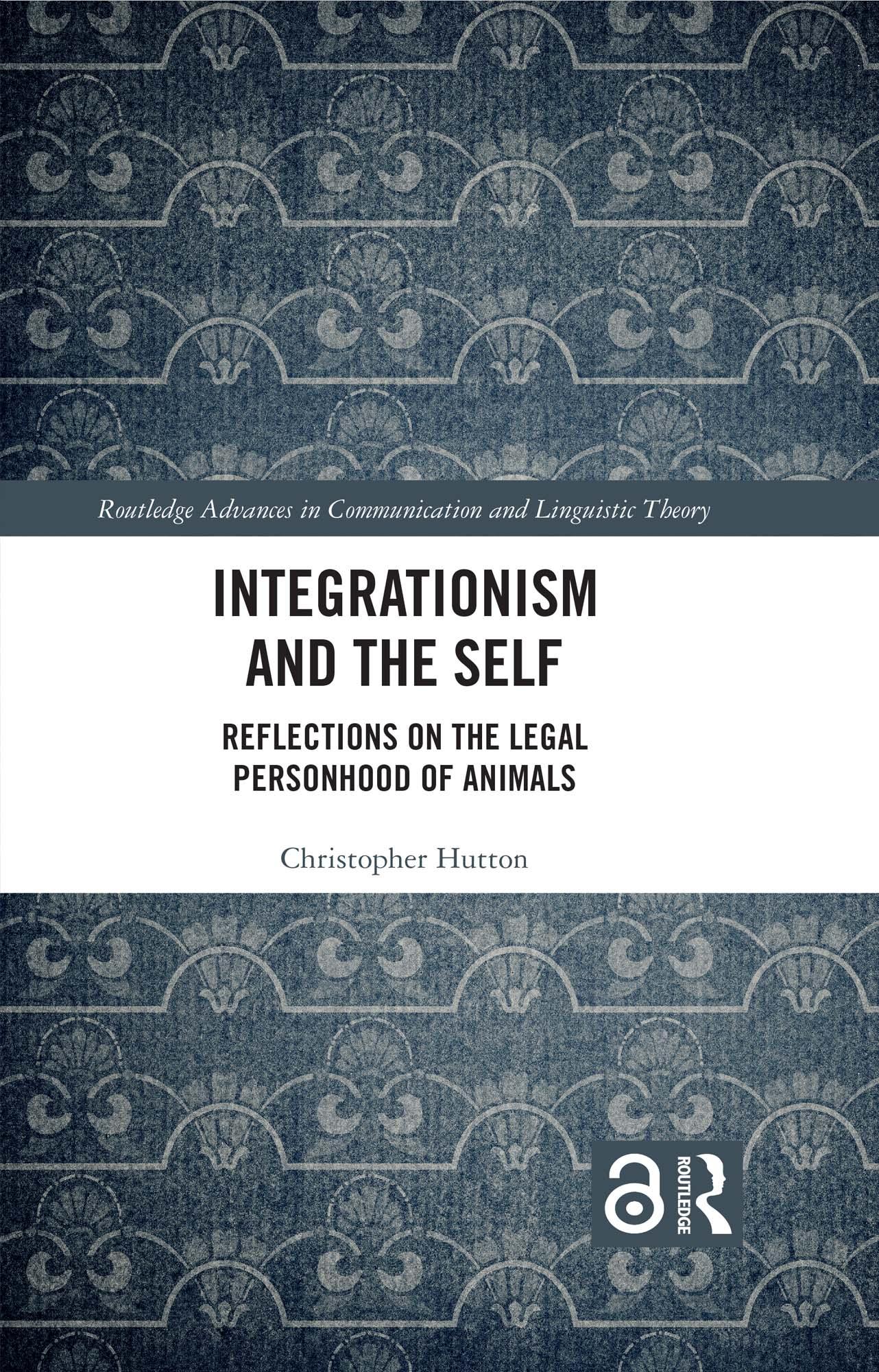
In recent years a set of challenging questions have arisen in relation to the status of animals; their treatment by human beings; their cognitive abilities; and the nature of their feelings, emotions, and capacity for suffering. This ground-breaking book draws from integrational semiology to investigate arguments around the rights of certain animals to be recognized as legal persons, thereby granting them many of the protections enjoyed by humans.
In parallel with these debates, the question of the legal personality of artificial intelligence (AI) systems has moved to the forefront of legal debate, with entities such as robots, cyborgs, self-driving cars, and genetically engineered beings under consideration. Integrationism offers a framework within which the wider theoretical and practical issues can be understood. Law requires closure and categorical answers; integrationism is an open-ended form of inquiry that is seen as removed from particular controversies. This book argues that the two domains can be brought together in a challenging and productive synthesis. A much-needed resource to examine the heart of this fascinating debate and a must-read for anyone interested in semiology, linguistics, philosophy, ethics, and law.
The Open Access version of this book, available at www.taylorfrancis.com, has been made available under a Creative Commons Attribution-Non Commercial-No Derivatives 4.0 license.
Płać wygodnie kartą, Klarną, Apple Pay lub Google Pay. Nie jesteś zadowolony? Zawsze masz 14-dniową gwarancję zwrotu pieniędzy. Więcej przeczytasz w naszych warunkach. Masz pytania? Napisz do nas na hello@memmo.org.
Memmo ułatwia naukę – gdziekolwiek jesteś na świecie. U nas znajdziesz podręczniki i sprytne narzędzia do nauki w jednym miejscu: streszczenia, quizy, podcasty i fiszki. A do tego Ted, Twój kumpel do nauki, który odpowie na wszystko, co Cię nurtuje. Ponad 50 000 studentów już tu się uczy – stworzone, byś uczył się szybciej i mniej stresował.