
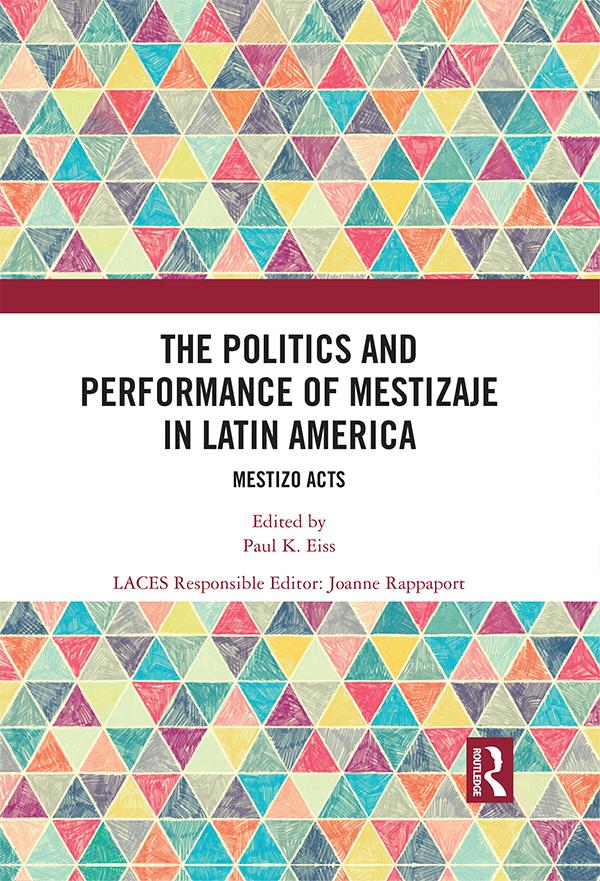
The term "mestizaje" is generally translated as race mixture, with races typically understood as groups differentiated by skin color or other physical characteristics. Yet such understandings seem contradicted by contemporary understandings of race as a cultural construct, or idea, rather than as a biological entity. How might one then approach mestizaje in a way that is not definitionally predicated on ‘race,’ or at least, on a modernist formulation of race as phenotypically expressed biological difference? The contributors to this volume provide explorations of this question in varied Latin American contexts (Mexico, Guatemala, Bolivia, Colombia, Peru), from the16th century to the present. They treat ‘mestizo acts’ neither as expressions of pre-existing social identities, nor as ideologies enforced from above, but as cultural performances enacted in the in-between spaces of social and political life. Moreover, they show how ‘mestizo acts’ not only express or reinforce social hierarchies, but institute or change them – seeking to prove – or to dismantle – genealogies of race, blood, sex, and language in public and political ways. The chapters in this book originally published as a special issue of Latin American and Caribbean Ethnic Studies.
Płać wygodnie kartą, Klarną, Apple Pay lub Google Pay. Nie jesteś zadowolony? Zawsze masz 14-dniową gwarancję zwrotu pieniędzy. Więcej przeczytasz w naszych warunkach. Masz pytania? Napisz do nas na hello@memmo.org.
Memmo ułatwia naukę – gdziekolwiek jesteś na świecie. U nas znajdziesz podręczniki i sprytne narzędzia do nauki w jednym miejscu: streszczenia, quizy, podcasty i fiszki. A do tego Ted, Twój kumpel do nauki, który odpowie na wszystko, co Cię nurtuje. Ponad 50 000 studentów już tu się uczy – stworzone, byś uczył się szybciej i mniej stresował.