
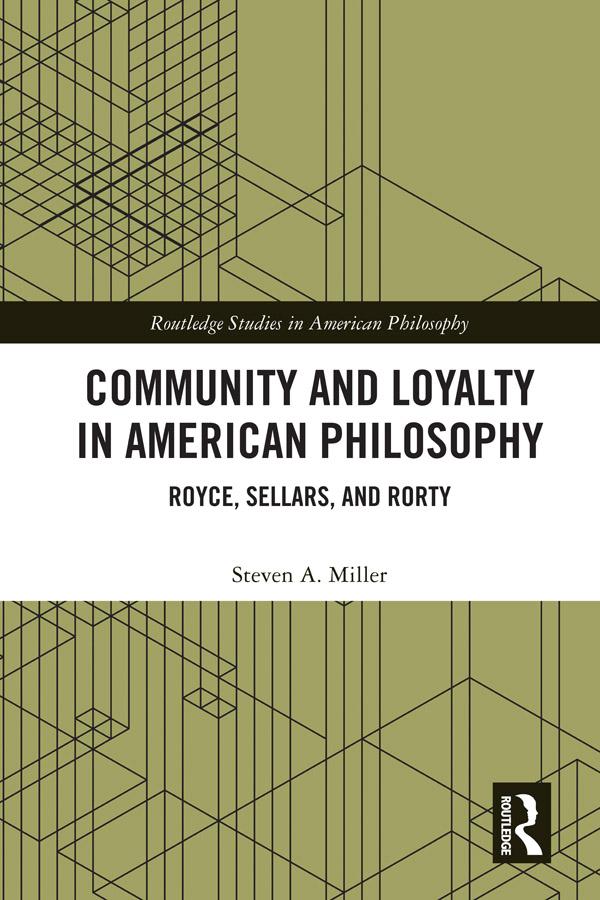
American pragmatism has always had at its heart a focus on questions of communities and ethics. This book explores the interrelated work of three thinkers influenced by the pragmatist tradition: Josiah Royce, Wilfrid Sellars, and Richard Rorty. These thinkers’ work spanned the range of twentieth-century philosophy, both historically and conceptually, but all had common concerns about how morality functions and what we can hope for in our interactions with others. Steven Miller argues that Royce, Sellars, and Rorty form a traditional line of inheritance, with the thought of each developing upon the best insights of the ones prior. Furthermore, he shows how three divergent views about the function, possibilities, and limits of moral community coalesce into a key narrative about how best we can work with and for other people, as we strive to come to think of widely different others as somehow being morally considerable as "one of us."
Płać wygodnie kartą, Klarną, Apple Pay lub Google Pay. Nie jesteś zadowolony? Zawsze masz 14-dniową gwarancję zwrotu pieniędzy. Więcej przeczytasz w naszych warunkach. Masz pytania? Napisz do nas na hello@memmo.org.
Memmo ułatwia naukę – gdziekolwiek jesteś na świecie. U nas znajdziesz podręczniki i sprytne narzędzia do nauki w jednym miejscu: streszczenia, quizy, podcasty i fiszki. A do tego Ted, Twój kumpel do nauki, który odpowie na wszystko, co Cię nurtuje. Ponad 50 000 studentów już tu się uczy – stworzone, byś uczył się szybciej i mniej stresował.