
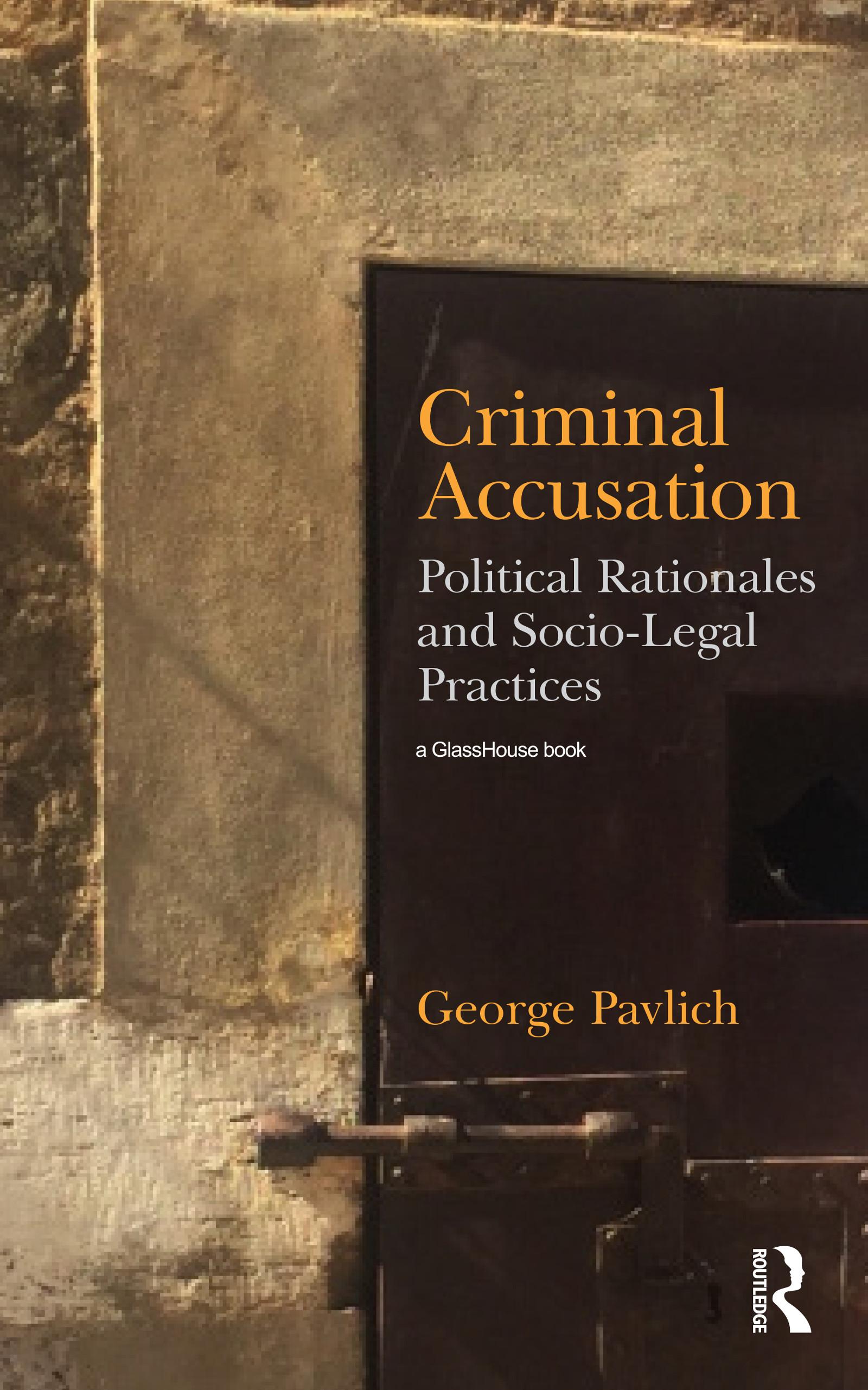
Accusing someone of committing a crime arrests everyday social relations and unfurls processes that decide on who to admit to criminal justice networks. Accusation demarcates specific subjects as the criminally accused, who then face courtroom trials, and possible punishment. It inaugurates a crime’s historical journey into being with sanctioned accusers successfully making criminal allegations against accused persons in the presence of authorized juridical agents. Given this decisive role in the production of criminal identities, it is surprising that criminal accusation has received relatively short shrift in sociological, socio-legal and criminological discourses. In this book, George Pavlich redresses this oversight by framing a socio-legal field directed to political rationales and practices of criminal accusation. The focus of its interrogation is the truth-telling powers of an accusatory lore that creates subjects within the confines of socially authorized spaces. And, in this respect, the book has two overarching aims in mind. First, it names and analyses powers of criminal accusation – its history, rationales, rites and effects – as an enduring gateway to criminal justice. Second, the book evaluates the prospects for limiting and/or changing apparatuses of criminal accusation. By understanding their powers, might it be possible to decrease the number who enter criminal justice’s gates? This question opens debate on the subject of the book’s final section: the prospects for more inclusive accusative grammars that do not, as a reflex, turn to exclusionary visions of crime and vengeful, segregated, corrective or risk-orientated punishment. Highlighting how expansive criminal justice systems are populated by accusatorial powers, and how it might be possible to recalibrate the lore that feeds them, this ground-breaking analysis will be of considerable interest to scholars working in socio-legal research studies, critical criminology, social theory, postcolonial studies and critical legal theory.
Płać wygodnie kartą, Klarną, Apple Pay lub Google Pay. Nie jesteś zadowolony? Zawsze masz 14-dniową gwarancję zwrotu pieniędzy. Więcej przeczytasz w naszych warunkach. Masz pytania? Napisz do nas na hello@memmo.org.
Memmo ułatwia naukę – gdziekolwiek jesteś na świecie. U nas znajdziesz podręczniki i sprytne narzędzia do nauki w jednym miejscu: streszczenia, quizy, podcasty i fiszki. A do tego Ted, Twój kumpel do nauki, który odpowie na wszystko, co Cię nurtuje. Ponad 50 000 studentów już tu się uczy – stworzone, byś uczył się szybciej i mniej stresował.