
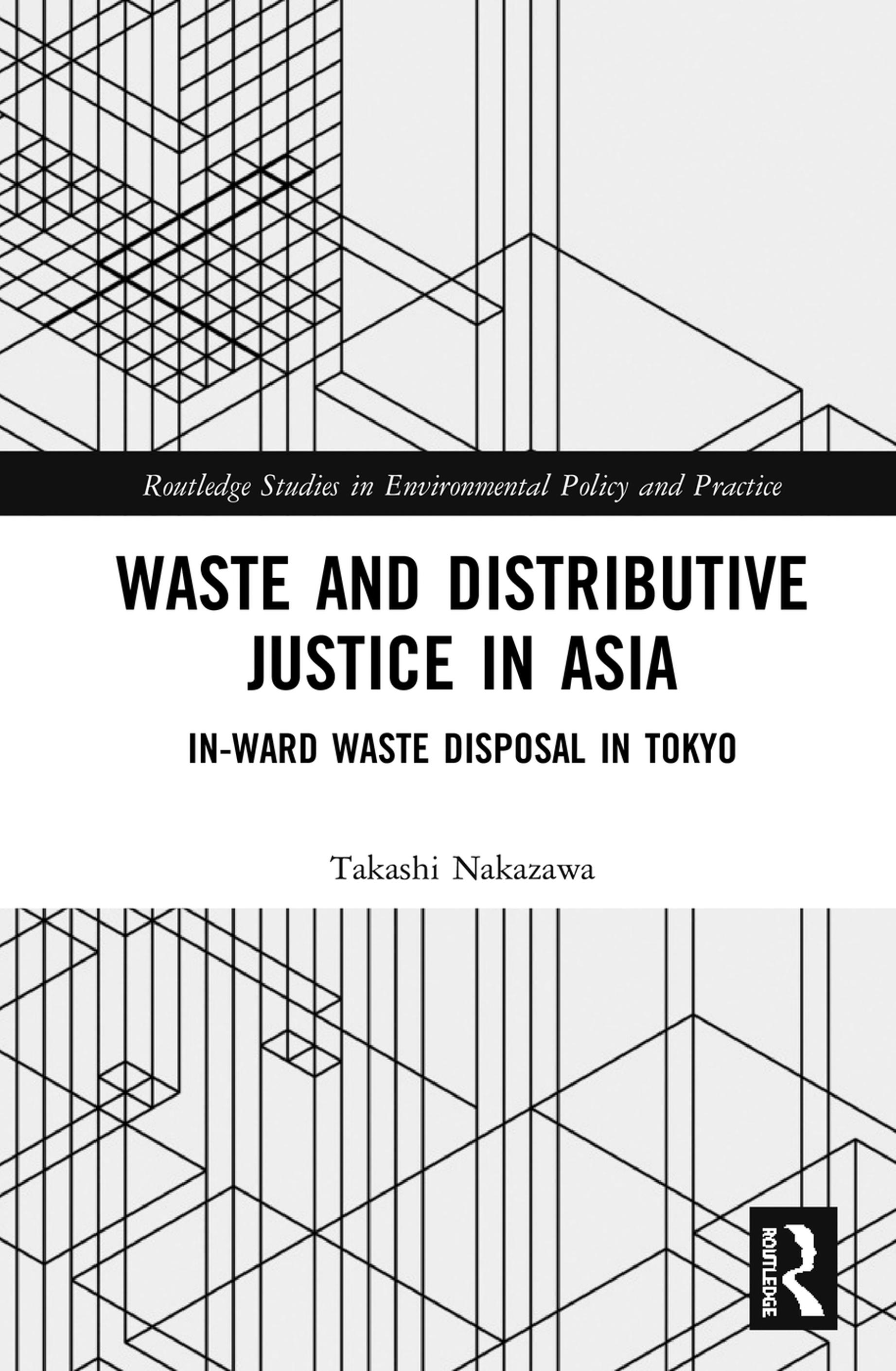
Conflicts over waste disposal facility siting is a pressing issue not only in developed countries but also in fast-growing countries that face drastic waste increase and rapid urbanisation. How to address distributive justice has been one of the biggest concerns.
This book examines what determines the influence of distributive justice in siting policy. In the 23 wards of Tokyo, one idea of distributive justice, known as "In-Ward Waste Disposal" (IWWD), emerged amid the ongoing garbage crisis in the early 1970s. IWWD was adopted as a significant principle, but its influence waxed and waned over time, until the idea was finally abandoned in 2003.
To unravel causes and mechanisms behind the changing influence of IWWD, this book adopts a framework that considers not only ideational causes, but also the power struggles between rationally calculating actors, as well as the influence of external events and environments. By combining an in-depth case study with an integrative theoretical framework, this book tells a thought-provoking story of the changing influence of IWWD in a deep, comprehensive and consistent way. This book provides significant insights and lessons for both academics and practitioners.
Płać wygodnie kartą, Klarną, Apple Pay lub Google Pay. Nie jesteś zadowolony? Zawsze masz 14-dniową gwarancję zwrotu pieniędzy. Więcej przeczytasz w naszych warunkach. Masz pytania? Napisz do nas na hello@memmo.org.
Memmo ułatwia naukę – gdziekolwiek jesteś na świecie. U nas znajdziesz podręczniki i sprytne narzędzia do nauki w jednym miejscu: streszczenia, quizy, podcasty i fiszki. A do tego Ted, Twój kumpel do nauki, który odpowie na wszystko, co Cię nurtuje. Ponad 50 000 studentów już tu się uczy – stworzone, byś uczył się szybciej i mniej stresował.