
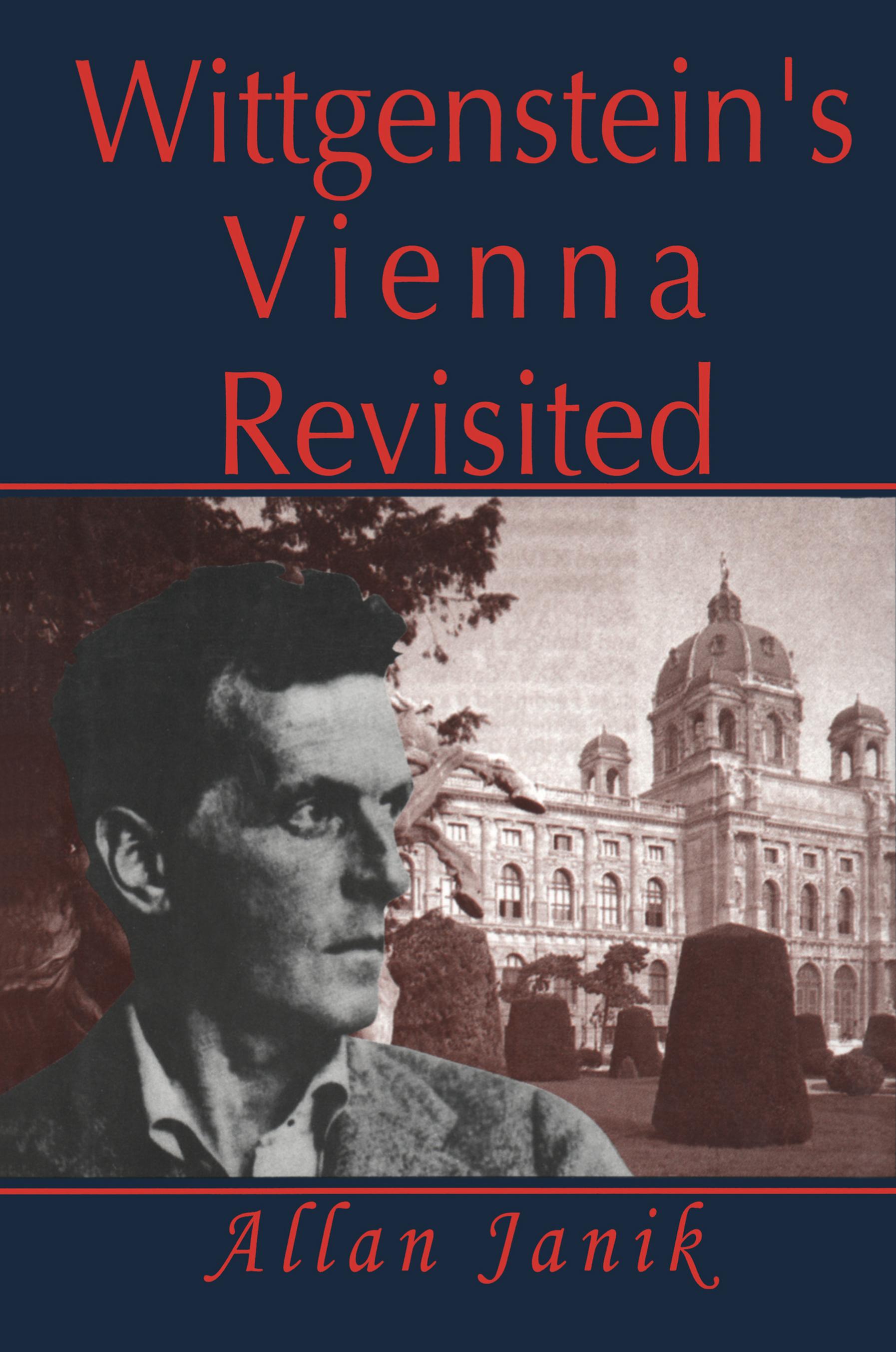
Fin de siecle Vienna was once memorably described by Karl Kraus as a "proving ground for the destruction of the world." In the decades leading to the World War that brought down the Austro-Hungarian empire, the city was at once an operetta dream world masking social and political problems and tension, as well as a center for the far-reaching explorations and innovations in music, art, science, and philosophy that would help to define modernity. One of the most powerful critiques of the retreat into fantasy was that of the philosopher Ludwig Wittgenstein, whose early career in Vienna has helped frame debates about ethical and aesthetic values in culture. In Wittgenstein's Vienna Revisited Allan Janik expands upon his work Wittgenstein's Vienna (co-authored with Stephen Toulmin) to amplify a number of significant points concerning the genesis of Wittgenstein's thought, the nature of Viennese culture, and criticism of contemporary culture.
Although Wittgenstein is the central figure in this volume, Janik places considerable emphasis on other influential figures, both Viennese and non-Viennese, in order to break down some of the persistent stereotypes about the philosopher and his surrounding culture, especially the myths of "carefree" Vienna and Wittgenstein the positivist. The persistence of these myths, in Janik's view, stems in part from the inability of many historians to differentiate past from present in the evaluation of intellectual currents. Janik reviews a number of figures overlooked in assessing Wittgenstein: Otto Weininger, Kraus, Schoenberg, Nietzsche, Wagner, Ibsen, Offenbach, and Georg Trakl. All of these, Janik demonstrates, are absolutely necessary to understand what was at stake in the debates on aestheticism and the critique of a modern culture.
Wittgenstein's efforts to recognize the limits of thought and language and thus to be fair to science, religion, and art account for his place of honor among critical modernists. These essays elucidate Wittgenstein's perspective on our culture.
Płać wygodnie kartą, Klarną, Apple Pay lub Google Pay. Nie jesteś zadowolony? Zawsze masz 14-dniową gwarancję zwrotu pieniędzy. Więcej przeczytasz w naszych warunkach. Masz pytania? Napisz do nas na hello@memmo.org.
Memmo ułatwia naukę – gdziekolwiek jesteś na świecie. U nas znajdziesz podręczniki i sprytne narzędzia do nauki w jednym miejscu: streszczenia, quizy, podcasty i fiszki. A do tego Ted, Twój kumpel do nauki, który odpowie na wszystko, co Cię nurtuje. Ponad 50 000 studentów już tu się uczy – stworzone, byś uczył się szybciej i mniej stresował.