
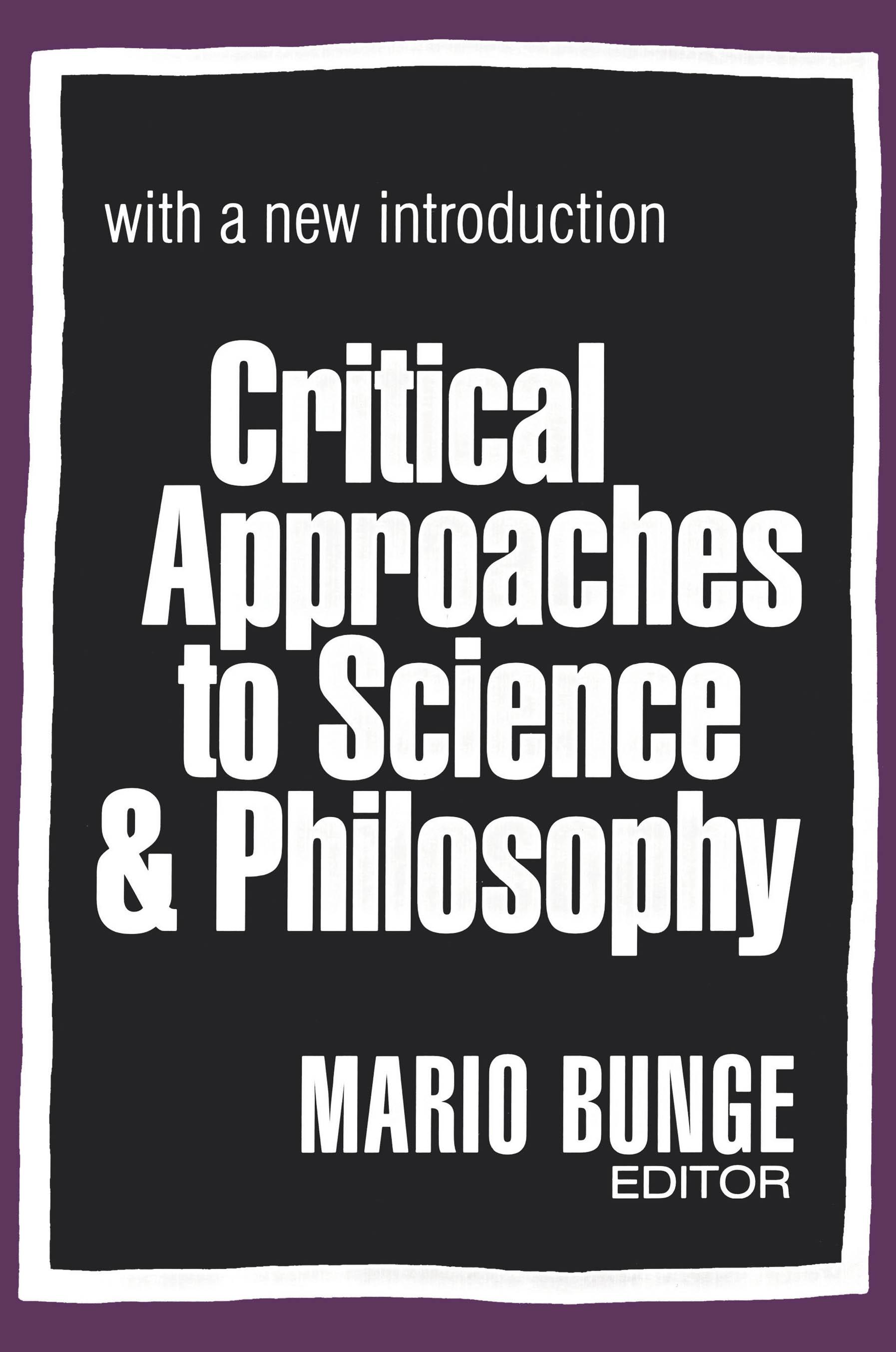
This collection of essays, written on four continents by scientists, philosophers and humanists, was initially presented to Karl R. Popper on his sixtieth birthday as a token of critical admiration and in recognition of his work. But the volume also stands on its own as a remarkable series of statements utilizing Popper's critical vision in the study of philosophy proper, logic, mathematics, science as method and theory, and finally to the study of society and history. What is remarkable is that Popper worked in all of these areas, not in a cursory or discursive way, but with the utmost clarity and rigor.
. The core position of this volume and its contributors is that the progress of knowledge is not a linear accumulation of definitive acquisitions but a zigzagging process in which counterexamples and unfavorable evidence ruin generalizations and prompt the invention of more comprehensive and sometimes deeper generalizations, to be criticized in their turn. A critical approach to problems, procedures, and results in every field of inquiry is therefore a necessary condition for the continuance of progress.
The title of this volume then is, in a sense, an homage to Popper's critical rationalism and critical empiricism. The essays are a tribute to his unceasing and uncompromising quest, not for final certainty, but for closer truth and increased clarity. Among the contributors are outstanding figures in philosophy and the exact sciences in their own right, including Herbert Feigl, R. M. Hare, J.O. Wisdom, Nicholas Rescher, David Bohm, Paul K. Feyerabend, F. A. Hayek, and Adolf Grunbaum. Social science contributions include Hans Albert on social science and moral philosophy, W. B. Gallie, on the critical philosophy of history, Pieter Geyl on The Open Society and its Enemies, and George H. Nadel on the philosophy of History.
Płać wygodnie kartą, Klarną, Apple Pay lub Google Pay. Nie jesteś zadowolony? Zawsze masz 14-dniową gwarancję zwrotu pieniędzy. Więcej przeczytasz w naszych warunkach. Masz pytania? Napisz do nas na hello@memmo.org.
Memmo ułatwia naukę – gdziekolwiek jesteś na świecie. U nas znajdziesz podręczniki i sprytne narzędzia do nauki w jednym miejscu: streszczenia, quizy, podcasty i fiszki. A do tego Ted, Twój kumpel do nauki, który odpowie na wszystko, co Cię nurtuje. Ponad 50 000 studentów już tu się uczy – stworzone, byś uczył się szybciej i mniej stresował.