
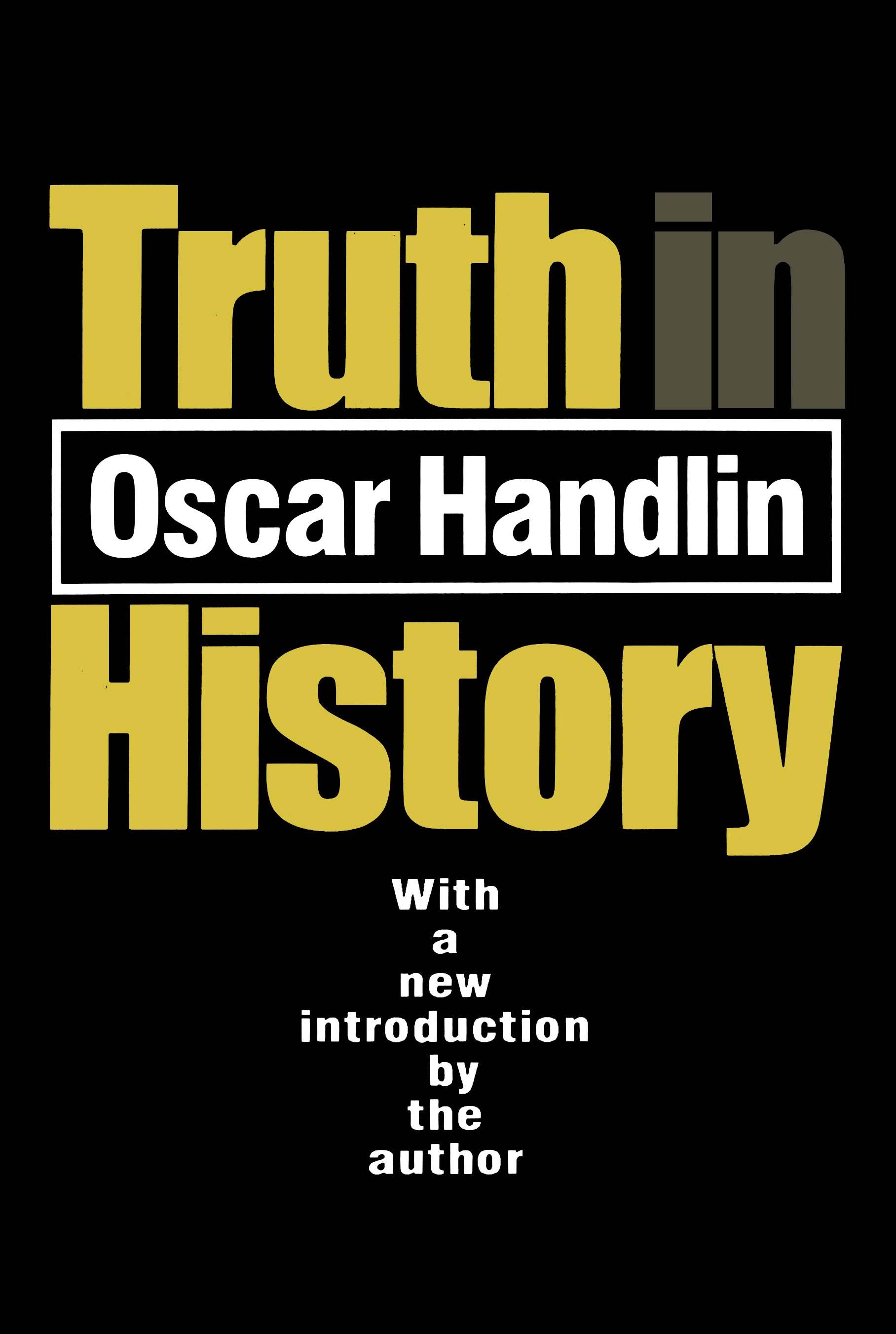
Like scholars in other fields, historians have long occupied themselves in self-justification. In a society which calibrates all measures by a single standard, the proof of scientific worth became relevance, which in turn was interpreted as a search not for truth but for political correctness. In a blistering professional critique of this tendency in academic scholarship, perhaps the first of its kind, Oscar Handlin offers an analysis that, if anything, has grown more pertinent over the past decade.
In seventeen chapters, written with the brilliant assurance of a master craftsman, Handlin shows why the turn to partisanship and meaning has undermined the calling of historical research. As his new introduction makes clear, partisanship has taken the best and brightest from the field into different callings. Both widely heralded upon its initial appearance as well as attacked with vigor, Truth in History emanates from a half-century's experience of reading, writing, teaching, researching, and publishing in history and related disciplines. The passage of time has only confirmed the concerns of Handlin and the accuracy of his predictions for the field. This book will be valuable for sociologists, economists, political scientists, and historians. It is a must read for those who contemplate a life of scholarship in liberal arts.
Płać wygodnie kartą, Klarną, Apple Pay lub Google Pay. Nie jesteś zadowolony? Zawsze masz 14-dniową gwarancję zwrotu pieniędzy. Więcej przeczytasz w naszych warunkach. Masz pytania? Napisz do nas na hello@memmo.org.
Memmo ułatwia naukę – gdziekolwiek jesteś na świecie. U nas znajdziesz podręczniki i sprytne narzędzia do nauki w jednym miejscu: streszczenia, quizy, podcasty i fiszki. A do tego Ted, Twój kumpel do nauki, który odpowie na wszystko, co Cię nurtuje. Ponad 50 000 studentów już tu się uczy – stworzone, byś uczył się szybciej i mniej stresował.