
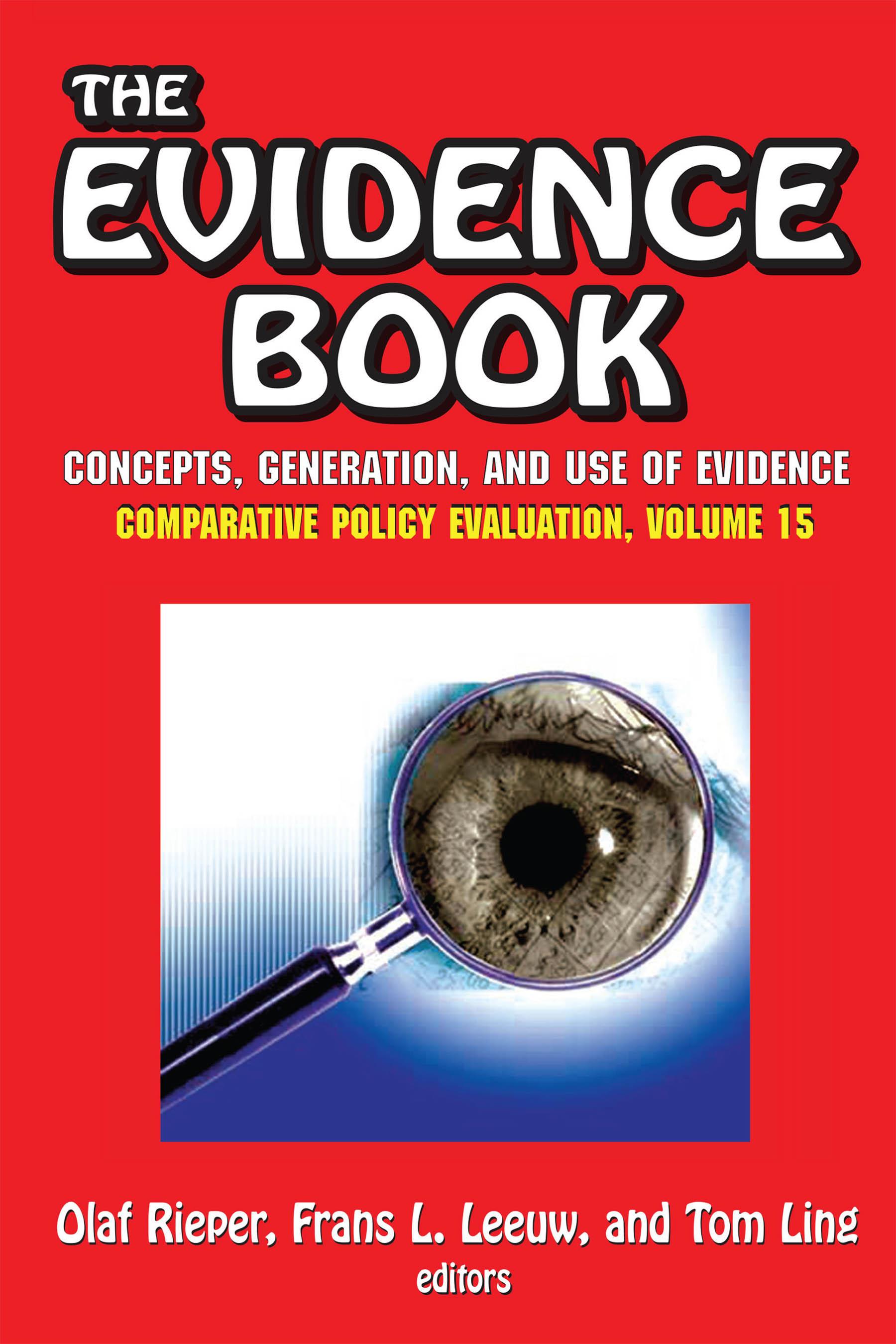
Knowledge grows as ideas are tested against each other. Agreement is not resolved simply by naming concepts but in the dialectical process of thesis, antithesis, and synthesis. There are many echoes of these debates in The Evidence Book. The contributors make claims for both practitioner wisdom and the voice of experience. Against this is posed the authority of experimental science and the randomized controlled trial.The contributors are concerned, in their own ways, with collecting, ranking, and analyzing evidence and using this to deliver evaluations. As an expert group, they are aware that the concept of evidence has been increasingly important in the last decade. As with other concepts, it too often escapes precise definition. Despite this, the growing importance of evidence has been advocated with enthusiasm by supporters who see it as a way of increasing the effectiveness and quality of decisions and of professional life.The willingness to engage in evidence-based policy and the means to do so is heavily constrained by economic, political, and cultural climates. This book is a marvelously comprehensive and utterly unique treatise on evidence-based policy. It is a wide-ranging contribution to the field of evaluation.
Płać wygodnie kartą, Klarną, Apple Pay lub Google Pay. Nie jesteś zadowolony? Zawsze masz 14-dniową gwarancję zwrotu pieniędzy. Więcej przeczytasz w naszych warunkach. Masz pytania? Napisz do nas na hello@memmo.org.
Memmo ułatwia naukę – gdziekolwiek jesteś na świecie. U nas znajdziesz podręczniki i sprytne narzędzia do nauki w jednym miejscu: streszczenia, quizy, podcasty i fiszki. A do tego Ted, Twój kumpel do nauki, który odpowie na wszystko, co Cię nurtuje. Ponad 50 000 studentów już tu się uczy – stworzone, byś uczył się szybciej i mniej stresował.
Może Ci się spodobać
Kup książkę0