
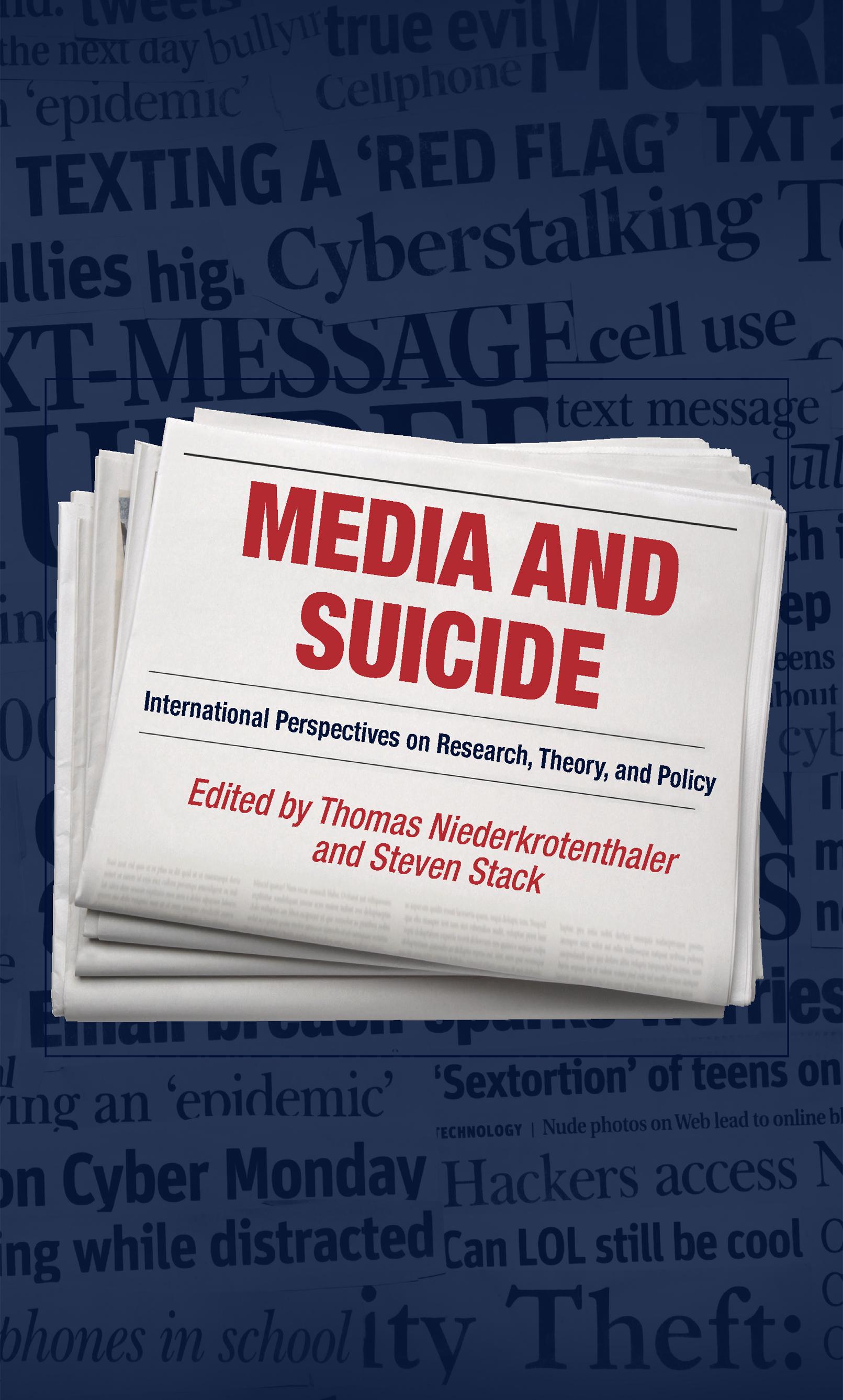
Somewhere in the world, in the next forty seconds, a person is going to commit suicide. Globally, suicides account for 50 percent of all violent deaths among men and 71 percent for women. Despite suicide prevention programs, therapy, and pharmacological treatments, the suicide rate is either increasing or remaining high around the world.
Media and Suicide holds traditional and emergent media accountable for influencing an individual’s decision to commit suicide. Global experts present research, historical analysis, theoretical disputes (including discussion on the Werther and Papageno effects), and policy regarding the media’s impact on suicide. They answer questions about the effects of different types of media and storytelling, show how the impact of social media can be diminished, discuss internet bullying, mass-shootings and mass-suicides, show the effects of recovery stories, and much more.
The editors also present examples of suicide policy in the United States, Switzerland, the United Kingdom, Ireland, and Hong Kong on how to best communicate reporting guidelines to decrease the copycat effect, especially in less developed nations where most of the world’s nearly one million suicides occur each year. Although there is much work to be done to prevent media-influenced suicide, this innovative volume will contribute a large piece to this complex puzzle.
Płać wygodnie kartą, Klarną, Apple Pay lub Google Pay. Nie jesteś zadowolony? Zawsze masz 14-dniową gwarancję zwrotu pieniędzy. Więcej przeczytasz w naszych warunkach. Masz pytania? Napisz do nas na hello@memmo.org.
Memmo ułatwia naukę – gdziekolwiek jesteś na świecie. U nas znajdziesz podręczniki i sprytne narzędzia do nauki w jednym miejscu: streszczenia, quizy, podcasty i fiszki. A do tego Ted, Twój kumpel do nauki, który odpowie na wszystko, co Cię nurtuje. Ponad 50 000 studentów już tu się uczy – stworzone, byś uczył się szybciej i mniej stresował.