
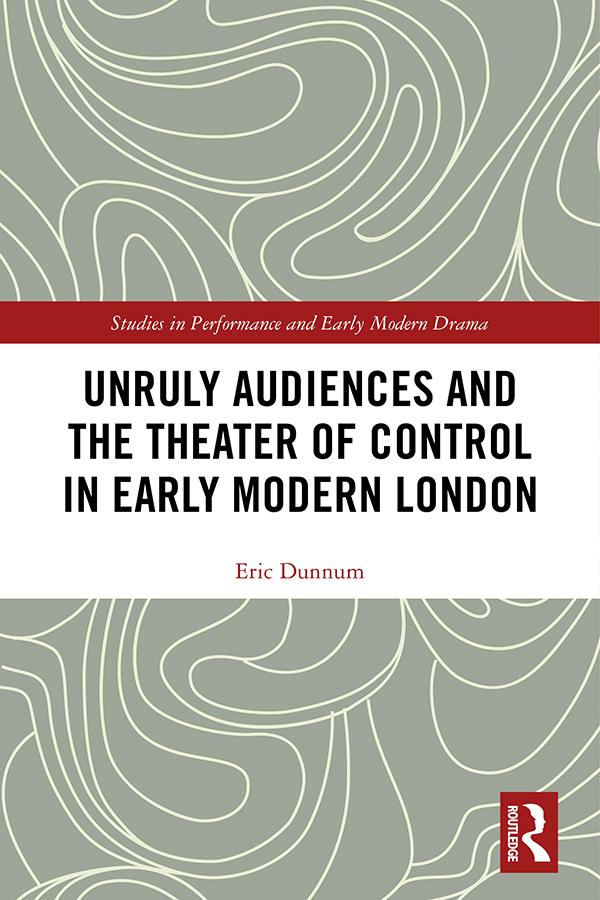
Unruly Audiences and the Theater of Control in Early Modern London explores the effects of audience riots on the dramaturgy of early modern playwrights, arguing that playwrights from Marlowe to Brome often used their plays to control the physical reactions of their audience.
This study analyses how, out of anxiety that unruly audiences would destroy the nascent industry of professional drama in England, playwrights sought to limit the effect that their plays could have on the audience. They tried to construct playgoing through their drama in the hopes of creating a less-reactive, more pensive, and controlled playgoer. The result was the radical experimentation in dramaturgy that, in part, defines Renaissance drama.
Written for scholars of Early Modern and Renaissance Drama and Theatre, Theatre History, and Early Modern and Renaissance History, this book calls for a new focus on the local economic concerns of the theatre companies as a way to understand the motivation behind the drama of early modern London.
Płać wygodnie kartą, Klarną, Apple Pay lub Google Pay. Nie jesteś zadowolony? Zawsze masz 14-dniową gwarancję zwrotu pieniędzy. Więcej przeczytasz w naszych warunkach. Masz pytania? Napisz do nas na hello@memmo.org.
Memmo ułatwia naukę – gdziekolwiek jesteś na świecie. U nas znajdziesz podręczniki i sprytne narzędzia do nauki w jednym miejscu: streszczenia, quizy, podcasty i fiszki. A do tego Ted, Twój kumpel do nauki, który odpowie na wszystko, co Cię nurtuje. Ponad 50 000 studentów już tu się uczy – stworzone, byś uczył się szybciej i mniej stresował.