
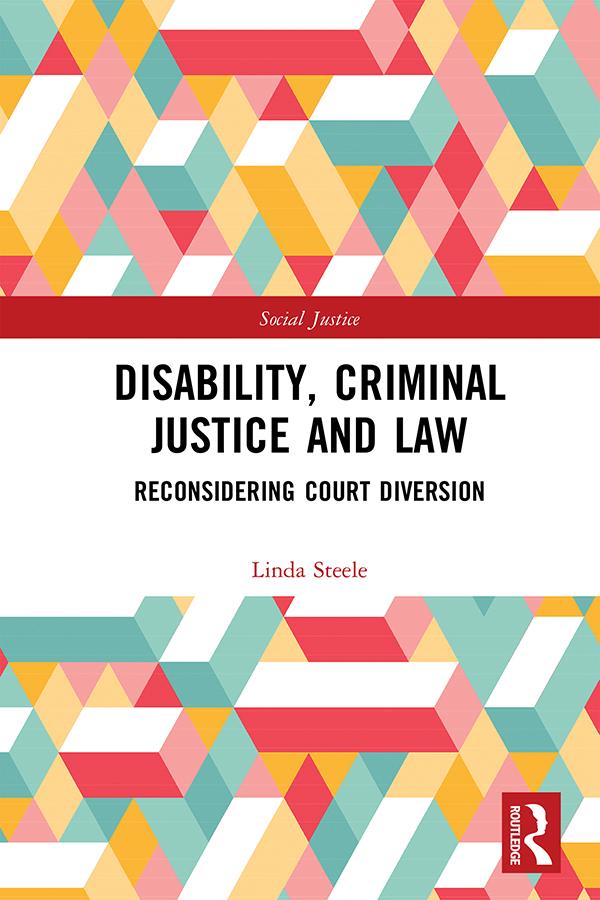
Through theoretical and empirical examination of legal frameworks for court diversion, this book interrogates law’s complicity in the debilitation of disabled people.
In a post-deinstitutionalisation era, diverting disabled people from criminal justice systems and into mental health and disability services is considered therapeutic, humane and socially just. Yet, by drawing on Foucauldian theory of biopolitics, critical legal and political theory and critical disability theory, Steele argues that court diversion continues disability oppression. It can facilitate criminalisation, control and punishment of disabled people who are not sentenced and might not even be convicted of any criminal offences. On a broader level, court diversion contributes to the longstanding phenomenon of disability-specific coercive intervention, legitimates prison incarceration and shores up the boundaries of foundational legal concepts at the core of jurisdiction, legal personhood and sovereignty. Steele shows that the United Nations Convention on the Rights of Persons with Disabilities cannot respond to the complexities of court diversion, suggesting the CRPD is of limited use in contesting carceral control and legal and settler colonial violence. The book not only offers new ways to understand relationships between disability, criminal justice and law; it also proposes theoretical and practical strategies that contribute to the development of a wider re-imagining of a more progressive and just socio-legal order.
The book will be of interest to scholars and students of disability law, criminal law, medical law, socio-legal studies, disability studies, social work and criminology. It will also be of interest to disability, prisoner and social justice activists.
Płać wygodnie kartą, Klarną, Apple Pay lub Google Pay. Nie jesteś zadowolony? Zawsze masz 14-dniową gwarancję zwrotu pieniędzy. Więcej przeczytasz w naszych warunkach. Masz pytania? Napisz do nas na hello@memmo.org.
Memmo ułatwia naukę – gdziekolwiek jesteś na świecie. U nas znajdziesz podręczniki i sprytne narzędzia do nauki w jednym miejscu: streszczenia, quizy, podcasty i fiszki. A do tego Ted, Twój kumpel do nauki, który odpowie na wszystko, co Cię nurtuje. Ponad 50 000 studentów już tu się uczy – stworzone, byś uczył się szybciej i mniej stresował.