
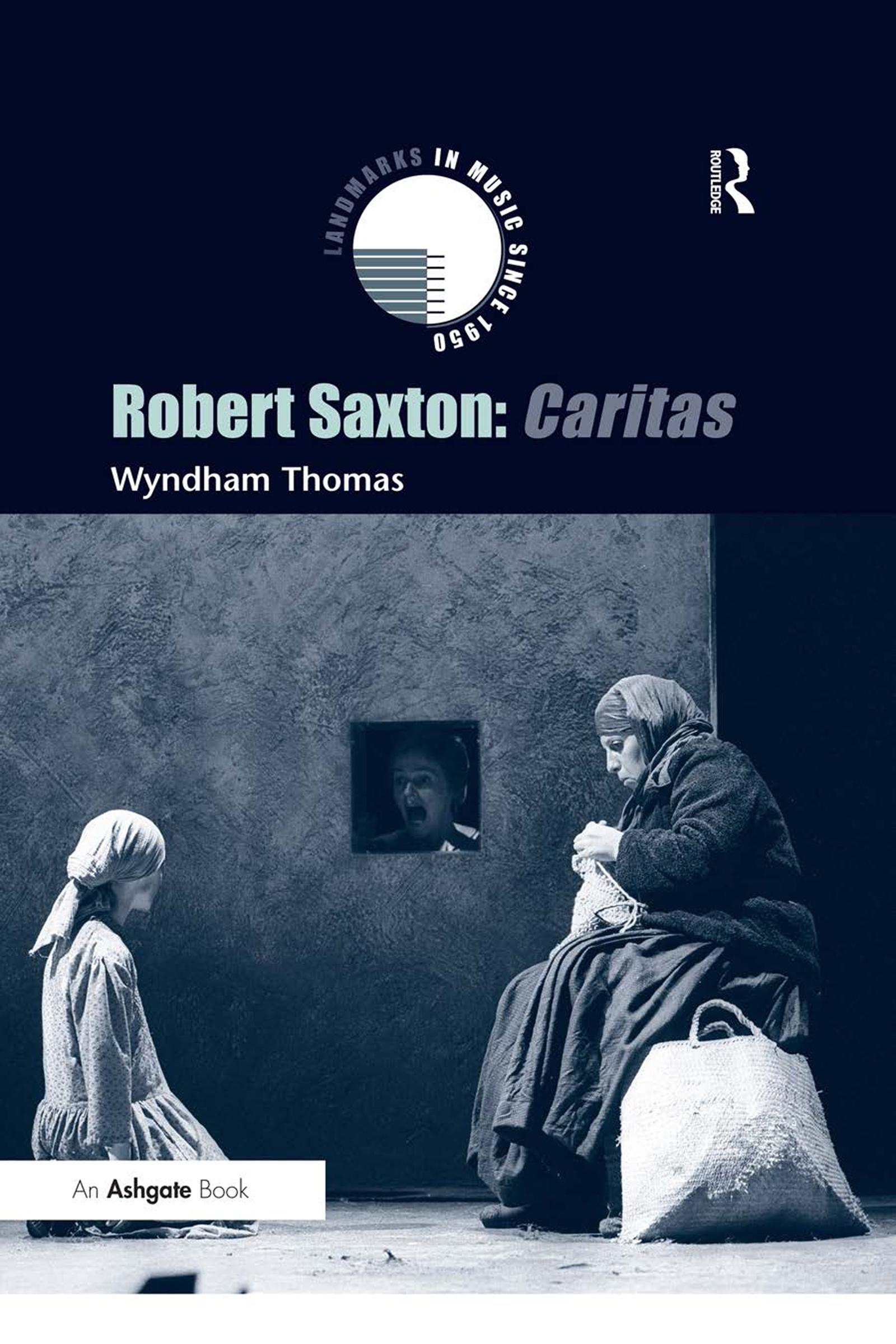
Caritas relates the 'true', yet largely undocumented story of Christine Carpenter, a 14th-century anchoress who moves towards insanity as her desire for a divine revelation continues to be unfulfilled after a period of three years locked in her cell. Although physically isolated, she is aware of the worldly life and love that she has abandoned. The very essence of the drama is the dogmatic refusal of her Bishop to release her from her vows. Set against the backcloth of the Peasants' Uprising (1381), the libretto/play juxtaposes sacred and secular worlds, the relative power and servitude of rulers and serfs, and the terrifying ordeal of Christine who is caught between the inflexibility of the established church and her personal religious expectations. Such a narrative was to offer rich opportunities for musical characterization and evocation of the historical context of the action, as well as substantial challenges in pacing and integrating the sequence of dramatic 'snap-shots' that culminate in a scene of total despair. The colourful juxtaposition of secular life and that of a recluse in Act One culminates in a Second Act finale of immense dramatic power in which Saxton's vocal and instrumental writing reaches new heights - a landmark both in his output and in late 20th century opera. Caritas - first performed in 1991 - occupies an important position in Robert Saxton's output and, as Thomas argues, in British opera during the closing decades of the 20th century. Thomas provides a detailed contextual setting in which to evaluate Caritas, as well as presenting an analytical commentary on the structure, musical language, instrumentation, staging and production of the opera. Thomas concludes with a reflection on the reception of Caritas as well as looking forward to Saxton's later and future works. A downloadable resource of the first performance is included.
Płać wygodnie kartą, Klarną, Apple Pay lub Google Pay. Nie jesteś zadowolony? Zawsze masz 14-dniową gwarancję zwrotu pieniędzy. Więcej przeczytasz w naszych warunkach. Masz pytania? Napisz do nas na hello@memmo.org.
Memmo ułatwia naukę – gdziekolwiek jesteś na świecie. U nas znajdziesz podręczniki i sprytne narzędzia do nauki w jednym miejscu: streszczenia, quizy, podcasty i fiszki. A do tego Ted, Twój kumpel do nauki, który odpowie na wszystko, co Cię nurtuje. Ponad 50 000 studentów już tu się uczy – stworzone, byś uczył się szybciej i mniej stresował.
Może Ci się spodobać
Kup książkę0