
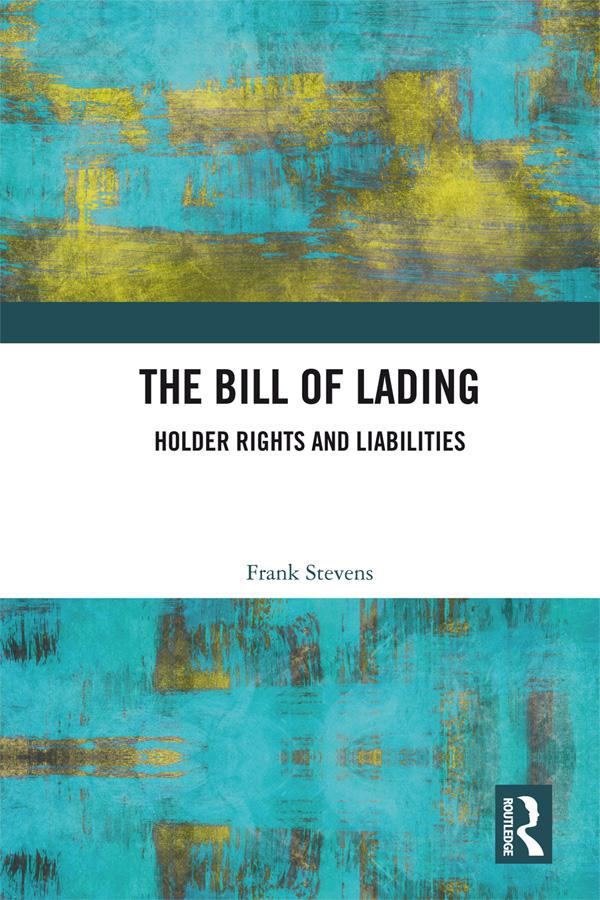
The carriage of goods by sea starts off with a contract of carriage, an essentially simple and straightforward contract between two parties, the shipper and the carrier. Very often, however, a bill of lading is issued and a third party appears on the scene: the holder of the bill of lading. The holder was not involved in the making of the contract of carriage, but does have rights, and possibly obligations, against the carrier at destination. The question then is how the third-party holder of the bill acquires those rights and obligations.
Analysing the different theories that have been proposed to explain the position of the third party holder, this book makes a distinction between contractual theories and non-contractual theories to explain the holder's position. Contractual theories build on the initial contract of carriage and apply contract law mechanisms while non-contractual theories construe the position of the third-party holder independently.
Following the analysis and appraisal of the different theories, this book makes the case that the position of the third-party holder of the bill of lading is not obvious or self-evident; and submits that a statutory approach to the position of the holder of the bill of lading has advantages and would be preferable.
Płać wygodnie kartą, Klarną, Apple Pay lub Google Pay. Nie jesteś zadowolony? Zawsze masz 14-dniową gwarancję zwrotu pieniędzy. Więcej przeczytasz w naszych warunkach. Masz pytania? Napisz do nas na hello@memmo.org.
Memmo ułatwia naukę – gdziekolwiek jesteś na świecie. U nas znajdziesz podręczniki i sprytne narzędzia do nauki w jednym miejscu: streszczenia, quizy, podcasty i fiszki. A do tego Ted, Twój kumpel do nauki, który odpowie na wszystko, co Cię nurtuje. Ponad 50 000 studentów już tu się uczy – stworzone, byś uczył się szybciej i mniej stresował.