
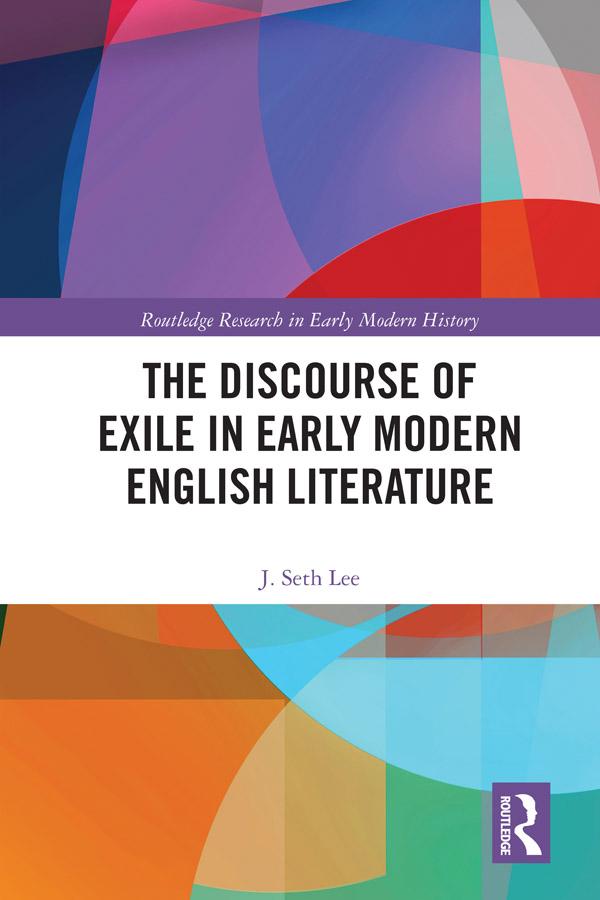
This volume examines the literary works of English exiles seeking to navigate what Edward Said calls "the perilous territory of not-belonging." The study opens by asking, "How did exile impact the way an early modern writer defined and constructed their personal and national identity?" In seeking an answer, the project traces the development of the "mind of exile," a textual phenomenon that manifests as an exiled figure whose departure and return restructures a stable, traditional center of socio-political power; a narrative where a character, an author, a reader, or some combination of the three experiences a type of cognitive displacement resulting in an epiphany that helps define a sense of self or national identity; and narratives that write and rewrite historical narratives to reimagine boundaries of national identity either towards or away from exiled groups or individuals. The study includes case studies from a variety of authors and groups – Geoffrey Chaucer, Edmund Spenser, the Wycliffites, the Marian Exiles, and their Elizabethan Catholic counterparts – to provide a clearer understanding of exile as an important part of the development of a modern English national identity. Reading exilic texts through this lens offers a fresh approach to early modern narratives of marginalization while examining and clarifying the importance of the individual experience of exile filtered through literary consciousness.
Płać wygodnie kartą, Klarną, Apple Pay lub Google Pay. Nie jesteś zadowolony? Zawsze masz 14-dniową gwarancję zwrotu pieniędzy. Więcej przeczytasz w naszych warunkach. Masz pytania? Napisz do nas na hello@memmo.org.
Memmo ułatwia naukę – gdziekolwiek jesteś na świecie. U nas znajdziesz podręczniki i sprytne narzędzia do nauki w jednym miejscu: streszczenia, quizy, podcasty i fiszki. A do tego Ted, Twój kumpel do nauki, który odpowie na wszystko, co Cię nurtuje. Ponad 50 000 studentów już tu się uczy – stworzone, byś uczył się szybciej i mniej stresował.