
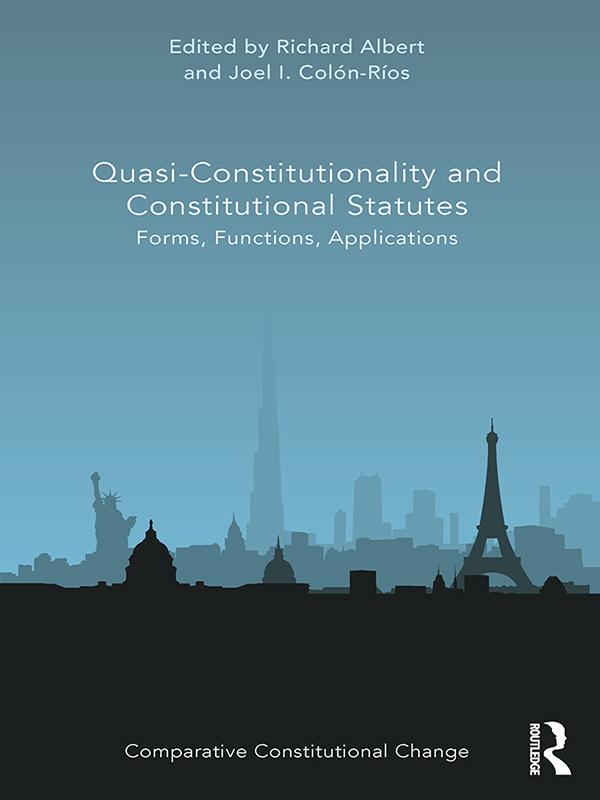
This book examines the interstices among statutory enactment, constitutional convention and formal constitution in which quasi-constitutionality exists. It provides a focal resource that can serve as a point of reference for scholars interested in quasi-constitutionality as a whole, from national and transnational perspectives, expanding on its many forms, functions, and applications with recourse to comparative insights. The book is divided in three main Parts, each of them preceded by a separate critical introduction in which an informed scholar contextualizes the chapters and offers reflections on the themes they develop. The first Part, titled 'Forms', is composed of chapters that address, from a theoretical and comparative perspective, questions related to the recognition of constitutional statutes and quasi-constitutional legislation. The second Part is titled 'Functions', and contains chapters that explore the explanatory power of quasi-constitutionality in different institutional contexts. The third Part, titled 'Applications', considers the ways in which constitutional statutes and quasi-constitutionality operate in relation to particular tensions and debates present in various jurisdictions.
Płać wygodnie kartą, Klarną, Apple Pay lub Google Pay. Nie jesteś zadowolony? Zawsze masz 14-dniową gwarancję zwrotu pieniędzy. Więcej przeczytasz w naszych warunkach. Masz pytania? Napisz do nas na hello@memmo.org.
Memmo ułatwia naukę – gdziekolwiek jesteś na świecie. U nas znajdziesz podręczniki i sprytne narzędzia do nauki w jednym miejscu: streszczenia, quizy, podcasty i fiszki. A do tego Ted, Twój kumpel do nauki, który odpowie na wszystko, co Cię nurtuje. Ponad 50 000 studentów już tu się uczy – stworzone, byś uczył się szybciej i mniej stresował.