
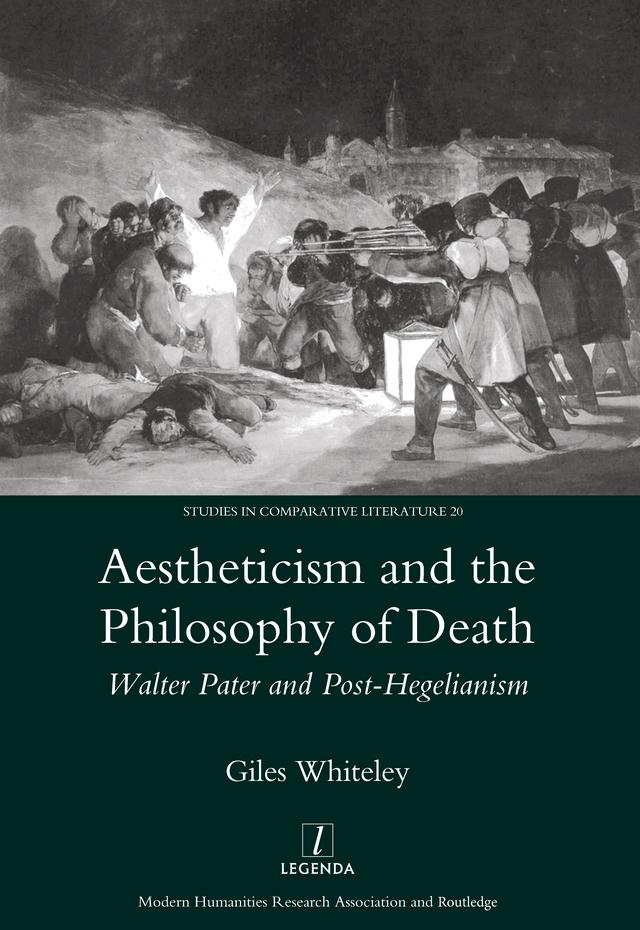
"Walter Pater, best known as the author of The Renaissance (1873) and as Oscar Wildes tutor and friend, was a leading figure in European aestheticism and British fin-de-siecle culture. Despite this, he has received only limited critical attention, and has tended to be read conservatively. Drawing on Paters unpublished manuscripts, Giles Whiteley challenges this view of Pater as a closeted don who spend the remainder of his life regretting the excesses of his Renaissance. Focusing on Paters reading of the German idealist philosopher, G. W. F. Hegel, Whiteley argues that Paters response to both the philosophical and the ideological legacies of idealism was significantly more advanced than has been hitherto thought. Presenting a persuasive new reading of the genre of the imaginary portrait Paters most elusive form of writing the book paints a picture of Walter Pater as a truly revolutionary thinker. Pater, like Nietzsche during the same period, breaks with the dialectic as a method. Anticipating the radical critiques of ideology of post- Hegelians such as Derrida and Deleuze, Pater becomes a radical and transgressive thinker in his own right."
Płać wygodnie kartą, Klarną, Apple Pay lub Google Pay. Nie jesteś zadowolony? Zawsze masz 14-dniową gwarancję zwrotu pieniędzy. Więcej przeczytasz w naszych warunkach. Masz pytania? Napisz do nas na hello@memmo.org.
Memmo ułatwia naukę – gdziekolwiek jesteś na świecie. U nas znajdziesz podręczniki i sprytne narzędzia do nauki w jednym miejscu: streszczenia, quizy, podcasty i fiszki. A do tego Ted, Twój kumpel do nauki, który odpowie na wszystko, co Cię nurtuje. Ponad 50 000 studentów już tu się uczy – stworzone, byś uczył się szybciej i mniej stresował.
Może Ci się spodobać
Kup książkę0