
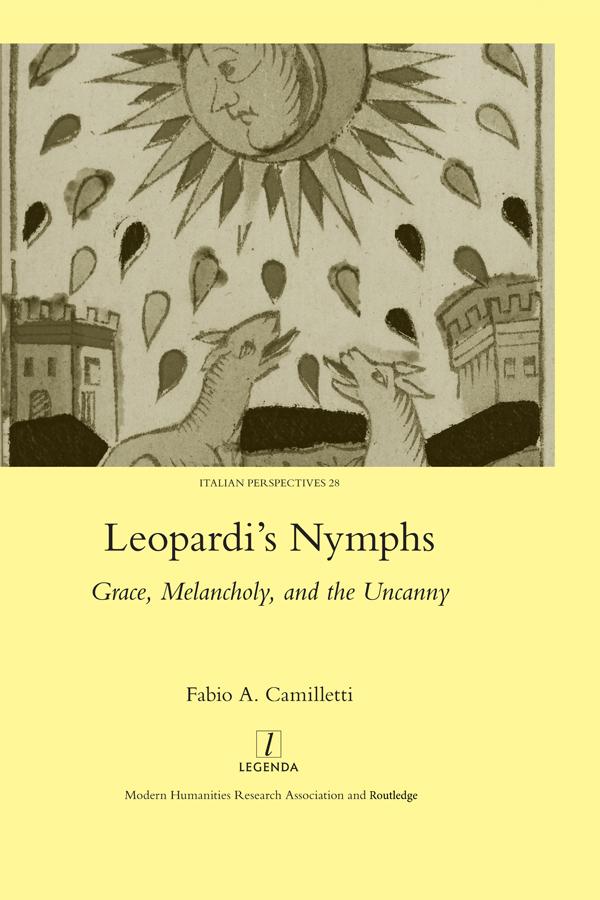
"How can one make poetry in a disenchanted age? For Giacomo Leopardi (1798-1837) this was the modern subject's most insolvable deadlock, after the Enlightenment's pitiless unveiling of truth. Still, in the poems written in 1828-29 between Pisa and the Marches, Leopardi manages to turn disillusion into a powerful source of inspiration, through an unprecedented balance between poetic lightness and philosophical density. The addressees of these cantos are two prematurely dead maidens bearing names of nymphs, and thus obliquely metamorphosed into the charmingly disquieting deities that in Greek lore brought knowledge and poetic speech through possession. The nymph, Camilletti argues, can be seen as the inspirational power allowing the utterance of a new kind of poetry, bridging antiquity and modernity, illusion and disenchantment, life and death. By reading Leopardi's poems in the light of Freudian psychoanalysis and of Aby Warburg's and Walter Benjamin's thought, Camilletti gives a groundbreaking interpretation of the way Leopardi negotiates the original fracture between poetry and philosophy that characterises Western culture. Fabio Camilletti is Assistant Professor in Italian at the University of Warwick."
Płać wygodnie kartą, Klarną, Apple Pay lub Google Pay. Nie jesteś zadowolony? Zawsze masz 14-dniową gwarancję zwrotu pieniędzy. Więcej przeczytasz w naszych warunkach. Masz pytania? Napisz do nas na hello@memmo.org.
Memmo ułatwia naukę – gdziekolwiek jesteś na świecie. U nas znajdziesz podręczniki i sprytne narzędzia do nauki w jednym miejscu: streszczenia, quizy, podcasty i fiszki. A do tego Ted, Twój kumpel do nauki, który odpowie na wszystko, co Cię nurtuje. Ponad 50 000 studentów już tu się uczy – stworzone, byś uczył się szybciej i mniej stresował.
Może Ci się spodobać
Kup książkę0