
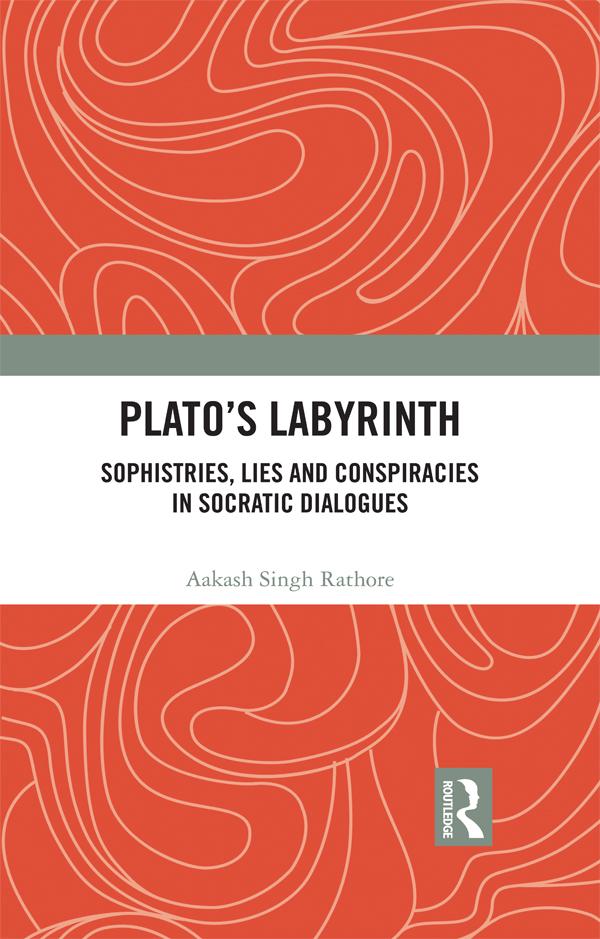
This original and stimulating study of Plato's Socratic dialogues rereads and reinterprets Plato's writings in terms of their dialogical or dramatic form. Taking inspiration from the techniques of Umberto Eco, Jacques Derrida, and Leo Strauss, Aakash Singh Rathore presents the Socratic dialogues as labyrinthine texts replete with sophistries and lies that mask behind them important philosophical and political conspiracies.
Plato's Labyrinth argues that these conspiracies and intrigues are of manifold kinds – in some, Plato is masterminding the conspiracy; in others, Socrates, or the Sophists, are the victims of the conspiracies. With supplementary forays ('intermissions') into the world of Xenophon and the Sophists, the complex and evolving series of overlapping arguments that the book lays out unfold within an edgy and dramatic narrative.
Presenting innovative readings of major texts – Plato's Parmenides, Republic, Symposium and Meno as also Homer's Odyssey – this work is an ambitious attempt to synthesize philological, political, historical and philosophical research into a classical text-centred study that is at once of urgent contemporary relevance.
This book aims to revitalize the study of ancient Greek thought in all its diverse disciplinary richness and will interest students and scholars across the social sciences and humanities, especially those in philosophy, Greek and classical studies, language and literature, politics, media and culture studies, theatre and performance studies, and history.
Płać wygodnie kartą, Klarną, Apple Pay lub Google Pay. Nie jesteś zadowolony? Zawsze masz 14-dniową gwarancję zwrotu pieniędzy. Więcej przeczytasz w naszych warunkach. Masz pytania? Napisz do nas na hello@memmo.org.
Memmo ułatwia naukę – gdziekolwiek jesteś na świecie. U nas znajdziesz podręczniki i sprytne narzędzia do nauki w jednym miejscu: streszczenia, quizy, podcasty i fiszki. A do tego Ted, Twój kumpel do nauki, który odpowie na wszystko, co Cię nurtuje. Ponad 50 000 studentów już tu się uczy – stworzone, byś uczył się szybciej i mniej stresował.