
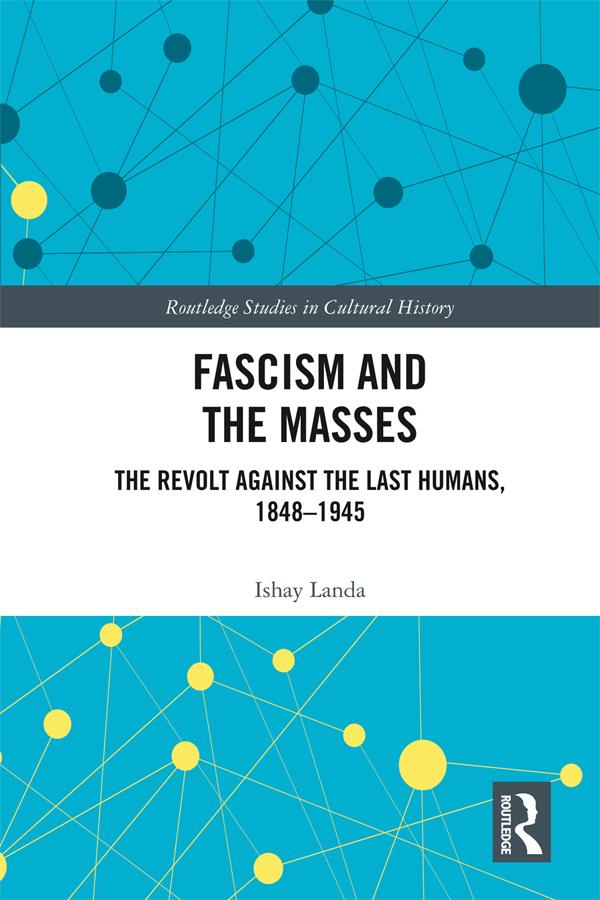
Highlighting the "mass" nature of interwar European fascism has long become commonplace. Throughout the years, numerous critics have construed fascism as a phenomenon of mass society, perhaps the ultimate expression of mass politics. This study deconstructs this long-standing perception. It argues that the entwining of fascism with the masses is a remarkable transubstantiation of a movement which understood and presented itself as a militant rejection of the ideal of mass politics, and indeed of mass society and mass culture more broadly conceived. Thus, rather than "massifying" society, fascism was the culmination of a long effort on the part of the élites and the middle-classes to de-massify it. The perennially menacing mass – seen as plebeian and insubordinate – was to be drilled into submission, replaced by supposedly superior collective entities, such as the nation, the race, or the people. Focusing on Italian fascism and German National Socialism, but consulting fascist movements and individuals elsewhere in interwar Europe, the book incisively shows how fascism is best understood as ferociously resisting what Elias referred to as "the civilizing process" and what Marx termed "the social individual." Fascism, notably, was a revolt against what Nietzsche described as the peaceful, middling and egalitarian "Last Humans."
Płać wygodnie kartą, Klarną, Apple Pay lub Google Pay. Nie jesteś zadowolony? Zawsze masz 14-dniową gwarancję zwrotu pieniędzy. Więcej przeczytasz w naszych warunkach. Masz pytania? Napisz do nas na hello@memmo.org.
Memmo ułatwia naukę – gdziekolwiek jesteś na świecie. U nas znajdziesz podręczniki i sprytne narzędzia do nauki w jednym miejscu: streszczenia, quizy, podcasty i fiszki. A do tego Ted, Twój kumpel do nauki, który odpowie na wszystko, co Cię nurtuje. Ponad 50 000 studentów już tu się uczy – stworzone, byś uczył się szybciej i mniej stresował.