
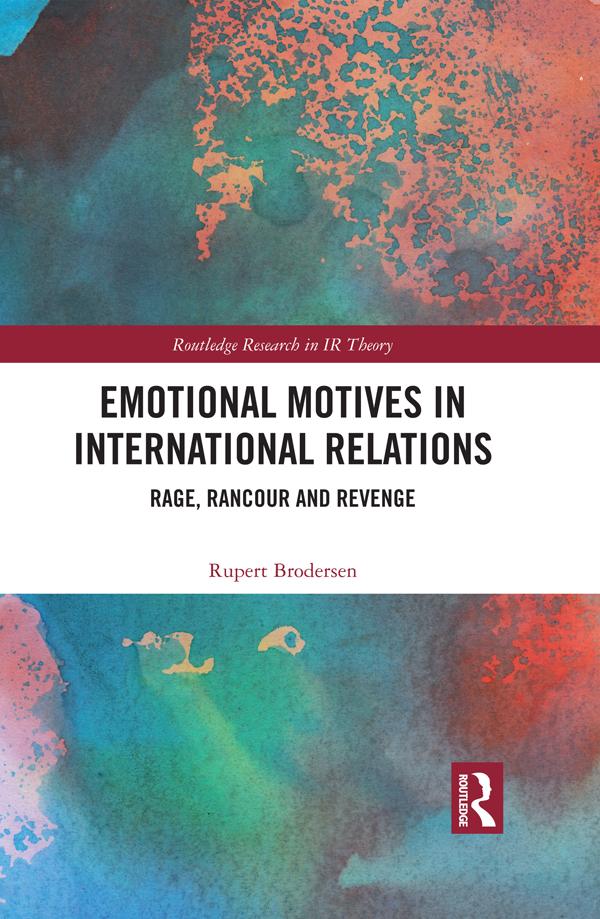
The study of emotions in International Relations is gaining wide-spread attention. Within the "emotional turn" in IR the emotion of rage however has not been given sufficient attention, instead being used as short-hand for irrationality and excess.
Rage is arguably one of the oldest and most destructive emotions in human affairs. This book offers an innovative approach that seeks to split rage into its traditional manifestation of aggression and violence, and into a less visible, passive manifestation of Nietzschean Ressentiment. This model facilitates a comprehensive understanding of revisionist motivation, from the violence of ISIS to the oppositionism of Putin’s Russia. The aim is to illustrate how a lack of violence can belie vengeful impulses and a silent rage, and how acts of violence, regardless of brutality, are often framed as a type of justice and "moral imperative" in the mind of the aggressor. This book raises serious questions and concerns about legitimacy and order in global affairs, and offers a firm theoretical basis for the exploration of present day conflicts.
Płać wygodnie kartą, Klarną, Apple Pay lub Google Pay. Nie jesteś zadowolony? Zawsze masz 14-dniową gwarancję zwrotu pieniędzy. Więcej przeczytasz w naszych warunkach. Masz pytania? Napisz do nas na hello@memmo.org.
Memmo ułatwia naukę – gdziekolwiek jesteś na świecie. U nas znajdziesz podręczniki i sprytne narzędzia do nauki w jednym miejscu: streszczenia, quizy, podcasty i fiszki. A do tego Ted, Twój kumpel do nauki, który odpowie na wszystko, co Cię nurtuje. Ponad 50 000 studentów już tu się uczy – stworzone, byś uczył się szybciej i mniej stresował.