
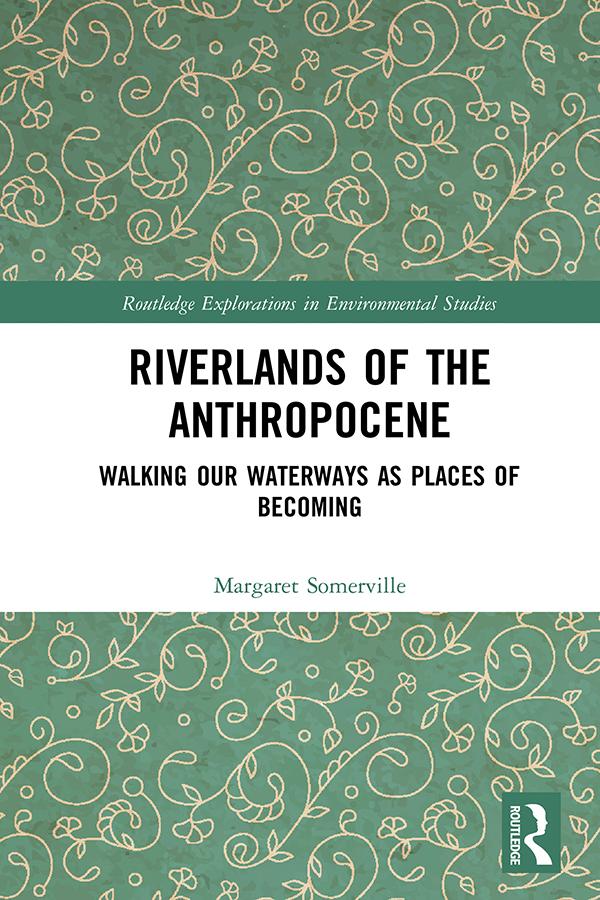
This is an invitation to readers to ponder universal questions about human relations with rivers and water for the precarious times of the Anthropocene. The book asks how humans can learn through sensory embodied encounters with local waterways that shape the architecture of cities and make global connections with environments everywhere.
The book considers human becomings with urban waterways to address some of the major conceptual challenges of the Anthropocene, through stories of trauma and healing, environmental activism, and encounters with the living beings that inhabit waterways. Its unique contribution is to bring together Australian Aboriginal knowledges with contemporary western, new materialist, posthuman and Deleuzean philosophies, foregrounding how visual, creative and artistic forms can assist us in thinking beyond the constraints of western thought to enable other modes of being and knowing the world for an unpredictable future.
Riverlands of the Anthropocene will be of particular interest to those studying the Anthropocene through the lenses of environmental humanities, environmental education, philosophy, ecofeminism and cultural studies.
Płać wygodnie kartą, Klarną, Apple Pay lub Google Pay. Nie jesteś zadowolony? Zawsze masz 14-dniową gwarancję zwrotu pieniędzy. Więcej przeczytasz w naszych warunkach. Masz pytania? Napisz do nas na hello@memmo.org.
Memmo ułatwia naukę – gdziekolwiek jesteś na świecie. U nas znajdziesz podręczniki i sprytne narzędzia do nauki w jednym miejscu: streszczenia, quizy, podcasty i fiszki. A do tego Ted, Twój kumpel do nauki, który odpowie na wszystko, co Cię nurtuje. Ponad 50 000 studentów już tu się uczy – stworzone, byś uczył się szybciej i mniej stresował.