
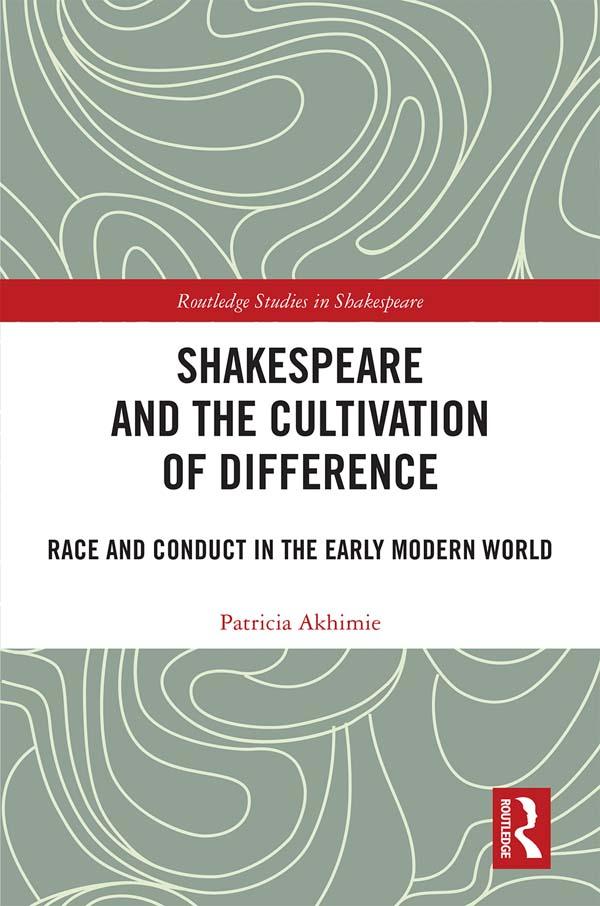
Shakespeare and the Cultivation of Difference reveals the relationship between racial discrimination and the struggle for upward social mobility in the early modern world. Reading Shakespeare’s plays alongside contemporaneous conduct literature - how-to books on self-improvement - this book demonstrates the ways that the pursuit of personal improvement was accomplished by the simultaneous stigmatization of particular kinds of difference. The widespread belief that one could better, or cultivate, oneself through proper conduct was coupled with an equally widespread belief that certain markers (including but not limited to "blackness"), indicated an inability to conduct oneself properly, laying the foundation for what we now call "racism." A careful reading of Shakespeare’s plays reveals a recurring critique of the conduct system voiced, for example, by malcontents and social climbers like Iago and Caliban, and embodied in the struggles of earnest strivers like Othello, Bottom, Dromio of Ephesus, and Dromio of Syracuse, whose bodies are bruised, pinched, blackened, and otherwise indelibly marked as uncultivatable. By approaching race through the discourse of conduct, this volume not only exposes the epistemic violence toward stigmatized others that lies at the heart of self-cultivation, but also contributes to the broader definition of race that has emerged in recent studies of cross-cultural encounter, colonialism, and the global early modern world.
Płać wygodnie kartą, Klarną, Apple Pay lub Google Pay. Nie jesteś zadowolony? Zawsze masz 14-dniową gwarancję zwrotu pieniędzy. Więcej przeczytasz w naszych warunkach. Masz pytania? Napisz do nas na hello@memmo.org.
Memmo ułatwia naukę – gdziekolwiek jesteś na świecie. U nas znajdziesz podręczniki i sprytne narzędzia do nauki w jednym miejscu: streszczenia, quizy, podcasty i fiszki. A do tego Ted, Twój kumpel do nauki, który odpowie na wszystko, co Cię nurtuje. Ponad 50 000 studentów już tu się uczy – stworzone, byś uczył się szybciej i mniej stresował.