
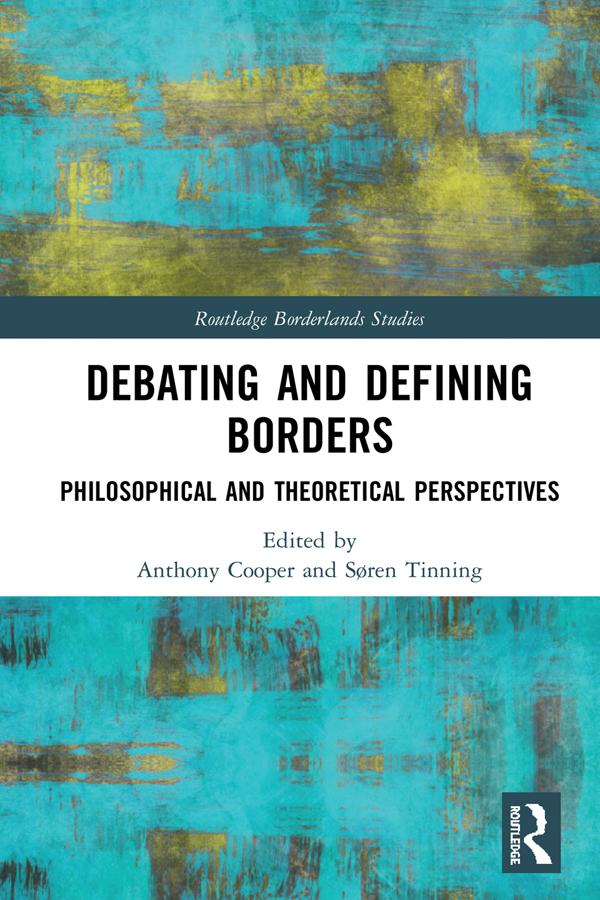
This book brings together insights from border scholars and philosophers to ask how we are to define and understand concepts of borders today. Borders have a defining role in contemporary societies. Take, for example, the 2016 US election and the UK Brexit referendum, and subsequent debate, where the rhetoric and symbolism of border controls proved fundamental to the outcomes. However, borders are also becoming ever more multifaceted and complex, representing intersections of political, economical, social, and cultural interests.
For some, borders are tangible, situated in time and place; for others, the nature of borders can be abstracted and discussed in general terms. By discussing borders philosophically and theoretically, this edited collection tackles head on the most defi ning and challenging questions within the fi eld of border studies regarding the defi nition of its very object of study. Part 1 of the book consists of theoretical contributions from border scholars, Part 2 takes a philosophical approach, and Part 3 brings together chapters where philosophy and border studies are directly related.
Borders intersect with the key issues of our time, from migration, climate change vulnerability, terror, globalization, inequality, and nationalism, to intertwining questions of culture, identity, ideology, and religion. This book will be of interest to those studying in these fields, and most especially to researchers of border studies and philosophy.
Płać wygodnie kartą, Klarną, Apple Pay lub Google Pay. Nie jesteś zadowolony? Zawsze masz 14-dniową gwarancję zwrotu pieniędzy. Więcej przeczytasz w naszych warunkach. Masz pytania? Napisz do nas na hello@memmo.org.
Memmo ułatwia naukę – gdziekolwiek jesteś na świecie. U nas znajdziesz podręczniki i sprytne narzędzia do nauki w jednym miejscu: streszczenia, quizy, podcasty i fiszki. A do tego Ted, Twój kumpel do nauki, który odpowie na wszystko, co Cię nurtuje. Ponad 50 000 studentów już tu się uczy – stworzone, byś uczył się szybciej i mniej stresował.