
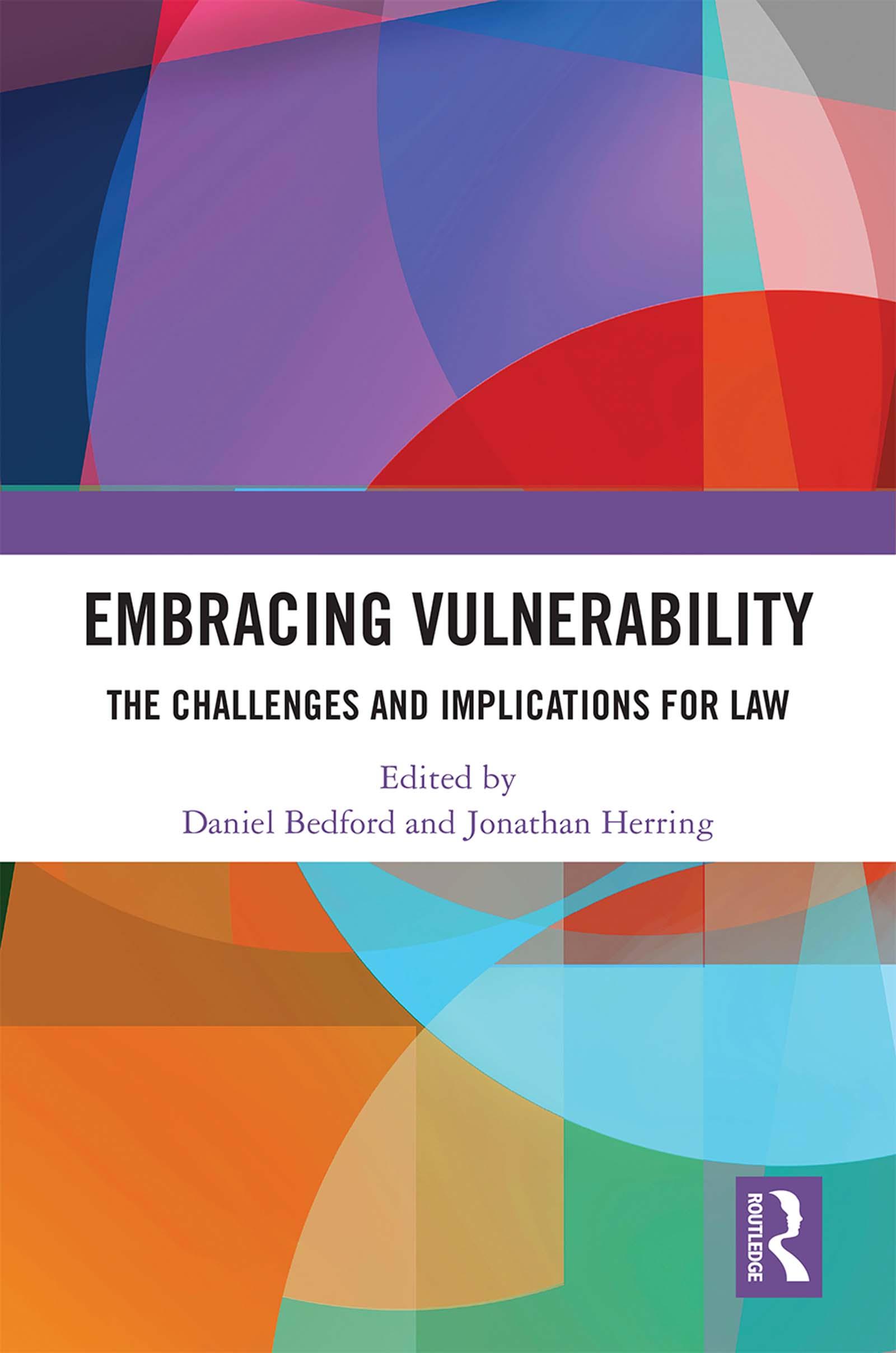
This book brings together legal scholars engaging with vulnerability theory to explore the implications and challenges for law of understanding vulnerability as generative and a source of connection and development.
The book is structured into five sections that cover fields of law where there is already significant recourse to the concept of vulnerability. These sections include a main chapter by a legal theorist who has previously examined the creative potential of vulnerability and responses from scholars working in the same field. This is designed to draw out some of the central debates concerning how vulnerability is conceptualised in law.
Several contributors highlight the need to re-focus on some of these more positive aspects of vulnerability to counter the way law is being used enable persons to escape the stigma associated with vulnerability by concealing that condition. They seek to explore how law might embrace vulnerability, rather than conceal it. The book also includes contributions that seek to bring vulnerability into a non-binary relationship with other core legal concepts, such as autonomy and dignity. Rather than discarding these legal concepts in favour of vulnerability, these contributions highlight how vulnerability can be entwined with relational autonomy and embodied dignity.
This book is essential reading for both students studying legal theory and practitioners interested in vulnerability.
Płać wygodnie kartą, Klarną, Apple Pay lub Google Pay. Nie jesteś zadowolony? Zawsze masz 14-dniową gwarancję zwrotu pieniędzy. Więcej przeczytasz w naszych warunkach. Masz pytania? Napisz do nas na hello@memmo.org.
Memmo ułatwia naukę – gdziekolwiek jesteś na świecie. U nas znajdziesz podręczniki i sprytne narzędzia do nauki w jednym miejscu: streszczenia, quizy, podcasty i fiszki. A do tego Ted, Twój kumpel do nauki, który odpowie na wszystko, co Cię nurtuje. Ponad 50 000 studentów już tu się uczy – stworzone, byś uczył się szybciej i mniej stresował.