
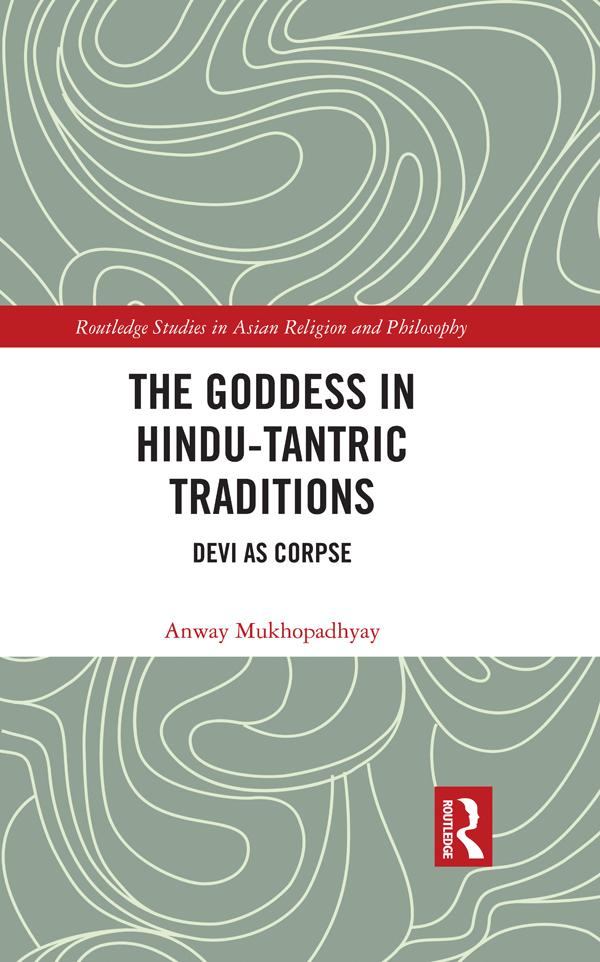
The Great Goddess, in her various puranic and tantric forms, is often figured as sitting on a corpse which is identified as Shiva-as-shava (God Shiva, the consort of the Devi and an iconic representation of the Absolute without attributes, the Nirguna Brahman). Hence, most of the existing critical works and ethnographic studies on Shaktism and the tantras have focused on the theological and symbolic paraphernalia of the corpses which operate as the asanas (seats) of the Devi in her various iconographies.
This book explores the figurations of the Goddess as corpse in several Hindu puranic and Shakta-tantric texts, popular practices, folk belief systems, legends and various other cultural phenomena based on this motif. It deals with a more intricate and fundamental issue than existing works on the subject: how and why is the Devi – herself - figured as a corpse in the Shakta texts, belief systems and folk practices associated with the tantras? The issues which have been raised in this book include: how does death become a complement to life within this religious epistemology? How does one learn to live with death, thereby lending new definitions and new epistemic and existential dimensions to life and death? And what is the relation between death and gender within this kind of figuration of the Goddess as death and dead body? Analysing multiple mythic narratives, hymns and scriptural texts where the Devi herself is said to take the form of the Shava (the corpse) as well as the Shakti who animates dead matter, this book focuses not only on the concept of the theological equivalence of the Shava (Shiva as corpse) and the Shakti (Energy) in tantras but also on the status of the Divine Mother as the Great Bridge between the apparently irreconcilable opposites, the mediatrix between Spirit and Matter, death and life, existence-in-stasis and existence-in-kinesis.
This book makes an important contribution to the fields of Hindu Studies, Goddess Spirituality, South Asian Religions, Women and Religion, India, Studies in Shaktism and Tantra, Cross-cultural Religious Studies, Gender Studies, Postcolonial Spirituality and Ecofeminism.
Płać wygodnie kartą, Klarną, Apple Pay lub Google Pay. Nie jesteś zadowolony? Zawsze masz 14-dniową gwarancję zwrotu pieniędzy. Więcej przeczytasz w naszych warunkach. Masz pytania? Napisz do nas na hello@memmo.org.
Memmo ułatwia naukę – gdziekolwiek jesteś na świecie. U nas znajdziesz podręczniki i sprytne narzędzia do nauki w jednym miejscu: streszczenia, quizy, podcasty i fiszki. A do tego Ted, Twój kumpel do nauki, który odpowie na wszystko, co Cię nurtuje. Ponad 50 000 studentów już tu się uczy – stworzone, byś uczył się szybciej i mniej stresował.