
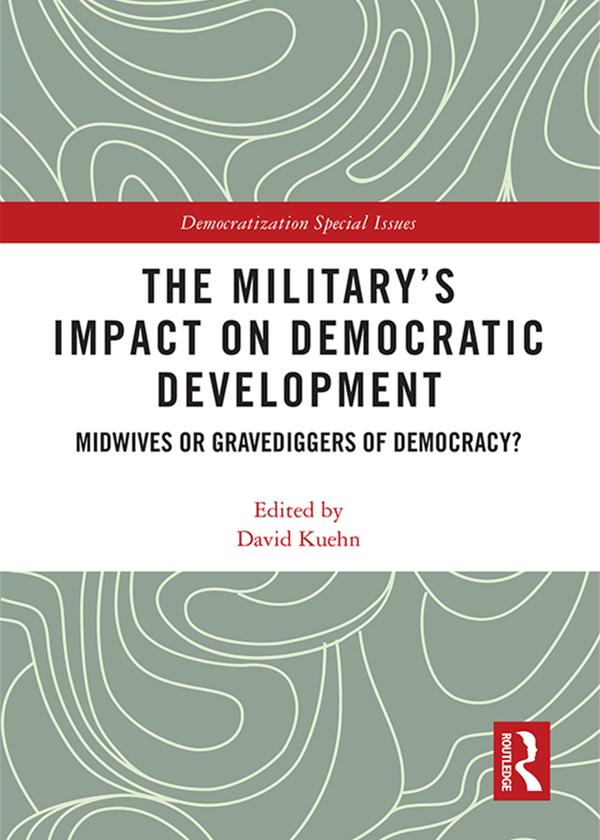
Despite the decline in the number of military coups since the 1960s and 1970s, Militaries continue to be crucial political actors in many world regions. Their impact on the democratic development of nations, however, has been mixed. On the one hand, coups against democratically elected leaders in Mali (2012), Egypt (2013), and Thailand (2014) have spelled doom for these countries’ nascent democratic regimes and have ushered in new periods of military dominance in politics. The cases of Portugal (1974), the Philippines (1986), and Tunisia (2011), on the other hand, show that the military’s decision not to defend authoritarian leaders against mass protests contributed crucially to the fall of dictatorships and facilitated transitions to democracy. This volume addresses the military’s ambivalent role as "midwife" or "gravedigger" of democracy and highlights the often multi-layered and complex relationship between militaries’ political behaviour and democratization.
The chapters were originally published in a special issue of Democratization.
Płać wygodnie kartą, Klarną, Apple Pay lub Google Pay. Nie jesteś zadowolony? Zawsze masz 14-dniową gwarancję zwrotu pieniędzy. Więcej przeczytasz w naszych warunkach. Masz pytania? Napisz do nas na hello@memmo.org.
Memmo ułatwia naukę – gdziekolwiek jesteś na świecie. U nas znajdziesz podręczniki i sprytne narzędzia do nauki w jednym miejscu: streszczenia, quizy, podcasty i fiszki. A do tego Ted, Twój kumpel do nauki, który odpowie na wszystko, co Cię nurtuje. Ponad 50 000 studentów już tu się uczy – stworzone, byś uczył się szybciej i mniej stresował.