
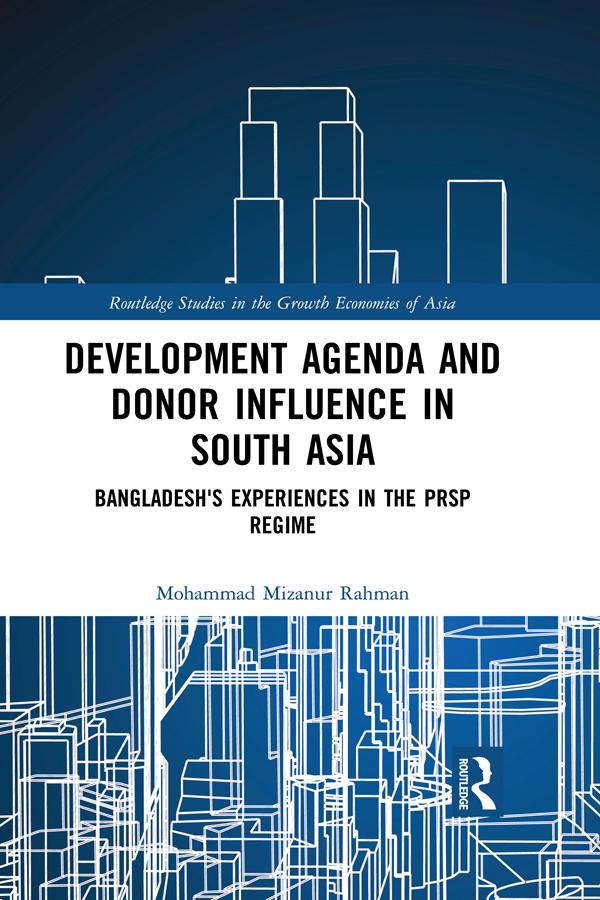
Policy ownership of development agenda emerged as an important aspect in international development cooperation during the 1990s in the wake of evident failures of reform initiatives in developing countries steered by donor agencies, particularly the international financial institutions (IFIs), the World Bank (WB) and the International Monetary Fund (IMF).
The principal focus of this book is to examine Bangladesh’s policy ownership in its PRSP by broadly analyzing the dynamics in the formulation process and examining the principal actors’ contribution to the formulation process. This book also deals with several other dimensions of foreign aid and its changing features including the shifts in WB-IMF’s approach to development cooperation. This book argues that the WB-IMF strongly influence Bangladesh’s development strategies and agendas and in general the WB-IMF have not changed much in their aid relationship despite clear limitations of their previous reform models. Building on Bangladesh’s current level of development the book advocates that Bangladesh needs to adopt a new model for development agenda setting.
Illustrating the influences of donor communities on the creation of development strategies in developing countries, this book presents a macro dynamics of the political economy of international development cooperation. It will be of interest to academics and professionals working on political economy, governance, public policy and development cooperation as well as South Asian Studies.
Płać wygodnie kartą, Klarną, Apple Pay lub Google Pay. Nie jesteś zadowolony? Zawsze masz 14-dniową gwarancję zwrotu pieniędzy. Więcej przeczytasz w naszych warunkach. Masz pytania? Napisz do nas na hello@memmo.org.
Memmo ułatwia naukę – gdziekolwiek jesteś na świecie. U nas znajdziesz podręczniki i sprytne narzędzia do nauki w jednym miejscu: streszczenia, quizy, podcasty i fiszki. A do tego Ted, Twój kumpel do nauki, który odpowie na wszystko, co Cię nurtuje. Ponad 50 000 studentów już tu się uczy – stworzone, byś uczył się szybciej i mniej stresował.