
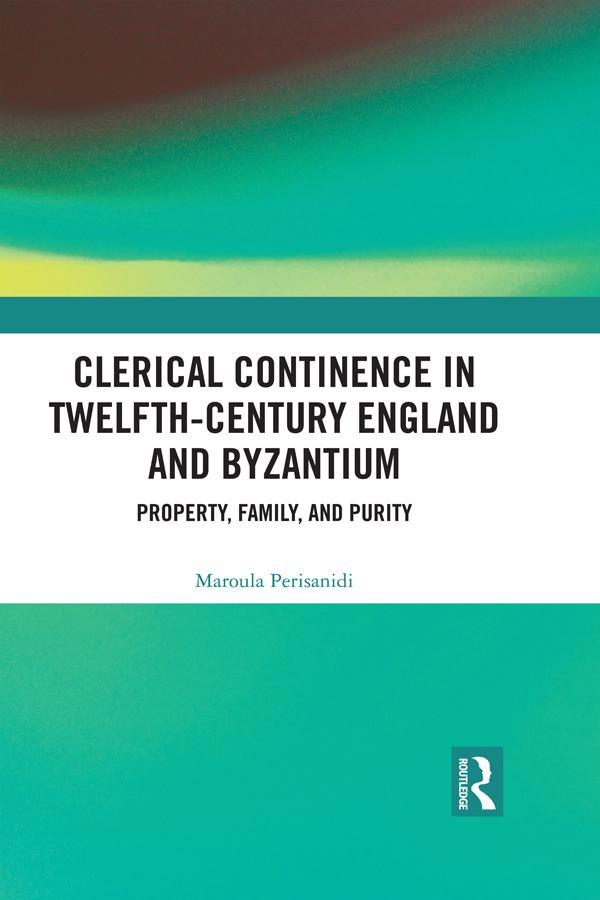
Why did the medieval West condemn clerical marriage as an abomination while the Byzantine Church affirmed its sanctifying nature? This book brings together ecclesiastical, legal, social, and cultural history in order to examine how Byzantine and Western medieval ecclesiastics made sense of their different rules of clerical continence. Western ecclesiastics condemned clerical marriage for three key reasons: married clerics could alienate ecclesiastical property for the sake of their families; they could secure careers in the Church for their sons, restricting ecclesiastical positions and lands to specific families; and they could pollute the sacred by officiating after having had sex with their wives. A comparative study shows that these offending risk factors were absent in twelfth-century Byzantium: clerics below the episcopate did not have enough access to ecclesiastical resources to put the Church at financial risk; clerical dynasties were understood within a wider frame of valued friendship networks; and sex within clerical marriage was never called impure in canon law, as there was little drive to use pollution discourses to separate clergy and laity. These facts are symptomatic of a much wider difference between West and East, impinging on ideas about social order, moral authority, and reform.
Płać wygodnie kartą, Klarną, Apple Pay lub Google Pay. Nie jesteś zadowolony? Zawsze masz 14-dniową gwarancję zwrotu pieniędzy. Więcej przeczytasz w naszych warunkach. Masz pytania? Napisz do nas na hello@memmo.org.
Memmo ułatwia naukę – gdziekolwiek jesteś na świecie. U nas znajdziesz podręczniki i sprytne narzędzia do nauki w jednym miejscu: streszczenia, quizy, podcasty i fiszki. A do tego Ted, Twój kumpel do nauki, który odpowie na wszystko, co Cię nurtuje. Ponad 50 000 studentów już tu się uczy – stworzone, byś uczył się szybciej i mniej stresował.