
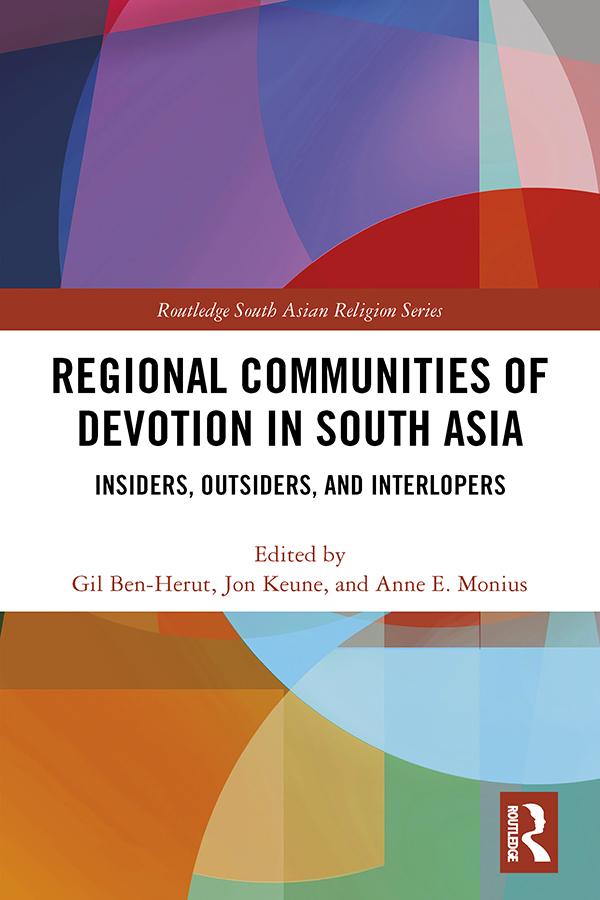
This book explores the key motif of the religious other in devotional (bhakti) literatures and practices from across the Indian subcontinent unmasks processes of representation that involve adoption, appropriation, and rejection of different social and religious agents.
The book reconsiders and challenges inherited notions of the bhakta’s or devotee’s other. Considering the ways in which bhakti might be conceived as having an inter-regional impact—as a force, discourse, network, mythology, ethic—the book critically engages with extant scholarly narratives about what bhakti is and traces when and how those narratives have been used. The sheer diversity of South Asia’s devotional traditions renders them an especially rich resource for examining social and religious fault lines, thereby furthering scholarly understanding of how communalism and sectarianism originate and develop on local or regional levels, with wider geographic implications.
Bringing together studies from a subcontinent-wide variety of linguistic, geographical, and historical frames for the first time, this book will be an important contribution to the literature on bhakti and will be of interest to scholars of South Asian Religions and Asian Religions.
Płać wygodnie kartą, Klarną, Apple Pay lub Google Pay. Nie jesteś zadowolony? Zawsze masz 14-dniową gwarancję zwrotu pieniędzy. Więcej przeczytasz w naszych warunkach. Masz pytania? Napisz do nas na hello@memmo.org.
Memmo ułatwia naukę – gdziekolwiek jesteś na świecie. U nas znajdziesz podręczniki i sprytne narzędzia do nauki w jednym miejscu: streszczenia, quizy, podcasty i fiszki. A do tego Ted, Twój kumpel do nauki, który odpowie na wszystko, co Cię nurtuje. Ponad 50 000 studentów już tu się uczy – stworzone, byś uczył się szybciej i mniej stresował.