
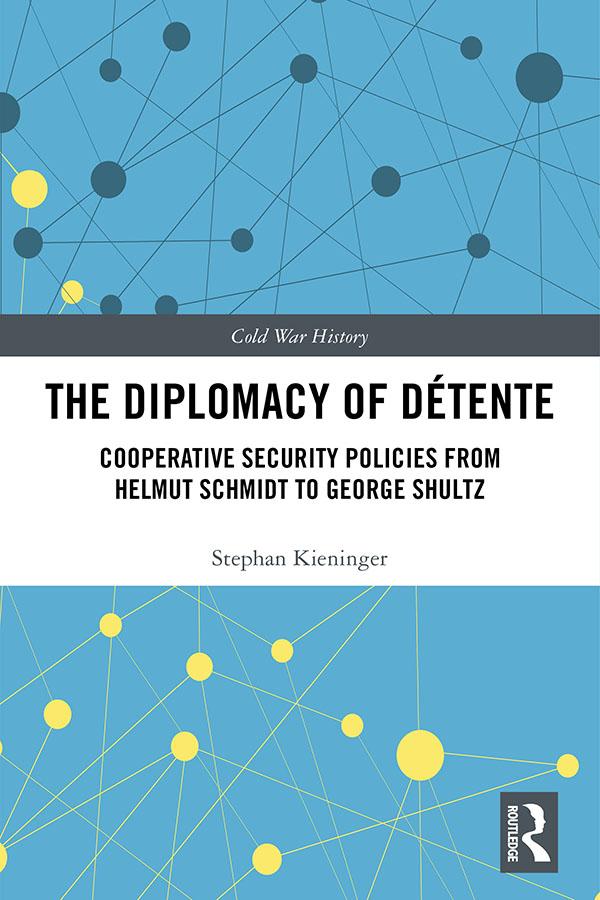
This book investigates the underlying reasons for the longevity of détente and its impact on East–West relations.
The volume examines the relevance of trade across the Iron Curtain as a means to facilitate mutual trust, as well as the emergence of new habits of transparency regardless of recurring military crises. A major theme of the book concerns Helmut Schmidt’s foreign policy and his contribution to the resilience of cooperative security policies in East–West relations. It examines Schmidt’s crucial role in the Euromissile crisis, his Ostpolitik diplomacy and his pan-European trade initiatives to engage the Soviet Union in a joint perspective of trade, industry and technology. Another key theme concerns the crisis in US–Soviet relations and the challenges of meaningful leadership communication between Washington and Moscow in the absence of backchannel diplomacy during the Carter years. The book depicts the freeze in US–Soviet relations after the Soviet invasion in Afghanistan, the declaration of martial law in Poland, and Helmut Schmidt’s efforts to serve as a mediator and interpreter working for a relaunch of US–Soviet dialogue. Eventually, the book highlights George Shultz’s pivotal role in the Reagan Administration’s efforts to improve US-Soviet relations, well before Mikhail Gorbachev’s arrival.
This book will be of interest to students of Cold War studies, diplomatic history, foreign policy and international relations.
Płać wygodnie kartą, Klarną, Apple Pay lub Google Pay. Nie jesteś zadowolony? Zawsze masz 14-dniową gwarancję zwrotu pieniędzy. Więcej przeczytasz w naszych warunkach. Masz pytania? Napisz do nas na hello@memmo.org.
Memmo ułatwia naukę – gdziekolwiek jesteś na świecie. U nas znajdziesz podręczniki i sprytne narzędzia do nauki w jednym miejscu: streszczenia, quizy, podcasty i fiszki. A do tego Ted, Twój kumpel do nauki, który odpowie na wszystko, co Cię nurtuje. Ponad 50 000 studentów już tu się uczy – stworzone, byś uczył się szybciej i mniej stresował.