
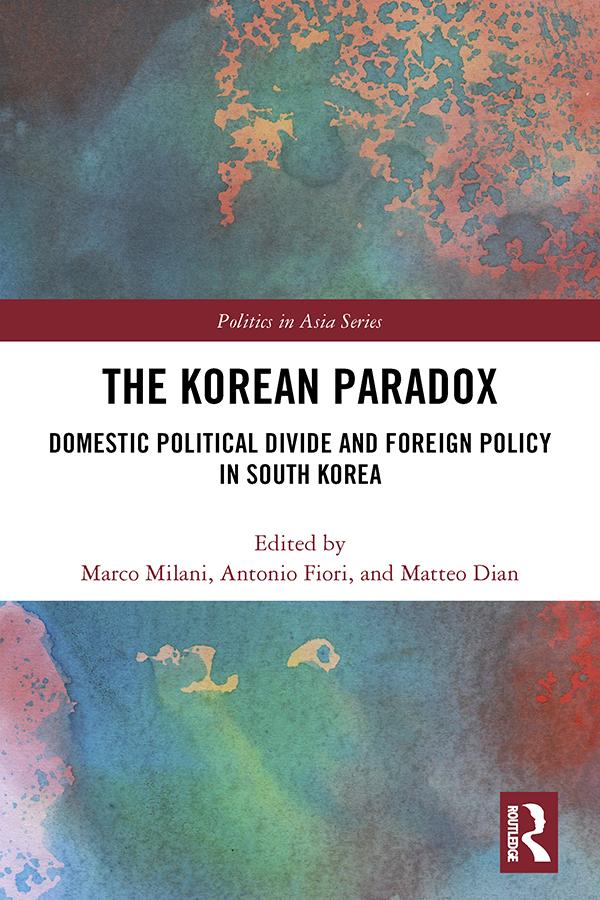
Bringing together an international line up of contributors, this book examines South Korea’s foreign policy strategies designed to cope with the challenges of the post-Cold War regional order and the emergence of a "Korean paradox".
Focusing on non-material factors in shaping the decision-making processes of primary actors, such as traditions, beliefs, and identities, this book begins by analysing the emergence of the "Asian Paradox" and explores how different political traditions have influenced South Korea’s foreign and security policies. In the second part (from Chapter 4), this book goes on to deal directly with the key issues in South Korea’s foreign policy today, with an emphasis on the progressive and conservative approaches to the challenges the country faces. This includes the North Korean threat, the alliance with the U.S., relations with China and Russia, the complicated relationship with Japan, and the emerging role of South Korea outside of Northeast Asia.
An innovative study of the domestic sources of South Korean foreign policy, The Korean Paradox investigates South Korea’s growing role at both regional and global levels. As such, it will be useful to students and scholars of Korean Studies, International Relations and East Asian Studies more generally.
Płać wygodnie kartą, Klarną, Apple Pay lub Google Pay. Nie jesteś zadowolony? Zawsze masz 14-dniową gwarancję zwrotu pieniędzy. Więcej przeczytasz w naszych warunkach. Masz pytania? Napisz do nas na hello@memmo.org.
Memmo ułatwia naukę – gdziekolwiek jesteś na świecie. U nas znajdziesz podręczniki i sprytne narzędzia do nauki w jednym miejscu: streszczenia, quizy, podcasty i fiszki. A do tego Ted, Twój kumpel do nauki, który odpowie na wszystko, co Cię nurtuje. Ponad 50 000 studentów już tu się uczy – stworzone, byś uczył się szybciej i mniej stresował.